South Africa’s richest woman explains why she ditched the United Kingdom to come home


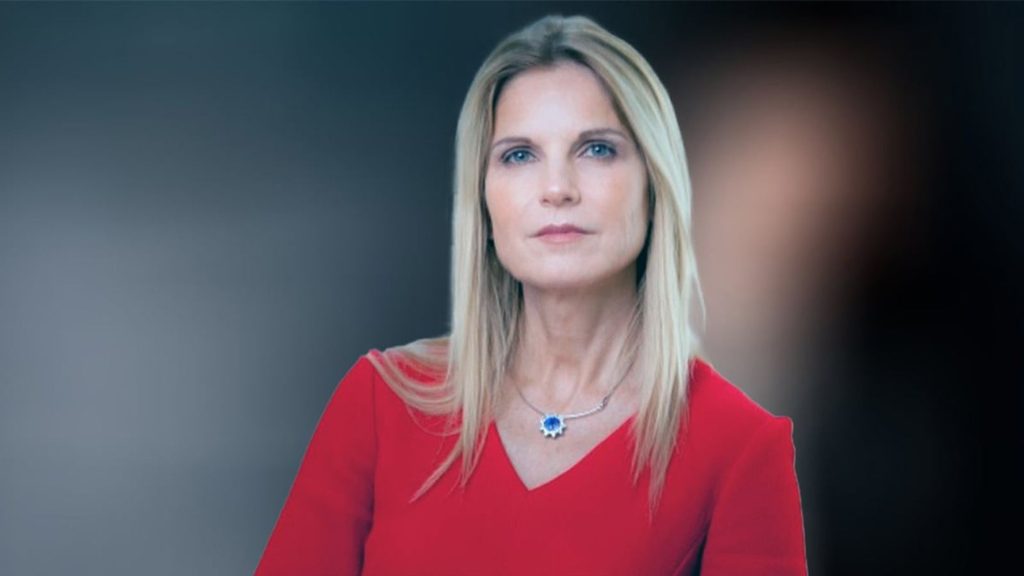
Sygnia CEO Magda Wierzycka returned to South Africa earlier this year, after leaving the United Kingdom following the imposition of punitive tax laws on trusts.
Wierzcyka is open about having returned to South Africa for tax reasons, while also explaining that she feels she can make a greater impact in her home country.
This brought to an end her nine-year stay in the United Kingdom and led Wierzcyka to sell her stake in Braavos, a London-based venture capital firm she had co-founded.
Wierzcyka first left South Africa for safety reasons, given her key role in sharing the Gupta Leaks with the local media.
This prompted her to move her family to London as a precaution. After a brief return to South Africa, she would leave the country permanently.
Such a move was a major loss for South Africa, with Wierzycka being one of the country’s best entrepreneurs and business leaders in recent decades.
Apart from her large tax payments, Wierzcyka built Sygnia from a tiny company with R2 billion in assets under management into a giant with R460.8 billion in assets.
At the same time, the company went from six people in a room to employing over 350 people.
This made Wierzcyka what economists call a “rainmaker”, a person who brings in large amounts of new business, generates value for shareholders, and broadly benefits society.
The success of Sygnia also made Wierzycka wealthy, with her personal fortune estimated at $250 million (R4.1 billion). This makes her Africa’s richest self-made woman.
At the time, Wierzcyka’s move to the United Kingdom was not solely about safety. It also had the potential to turbocharge her international businesses.
Wierzcyka’s move to London ensured she would be more greatly involved in running Braavos, a venture capital firm she co-managed with Andre Crawford-Brunt.
The move to London would also bring her closer to wealthy international clients and to fast-moving developments in the technology space.
Sygnia is the largest provider of international exchange-traded funds in South Africa and has large thematic funds, making its view on technological change important for investors and policyholders.
Coming home

Wierzcyka’s move to London was described as permanent at the time, as she did not consider South Africa safe enough for her family.
When the UK government began introducing changes to its non-domiciled tax regime, Wierzcyka began publicly looking for places to move to.
The non-domiciled tax regime enabled foreigners living in the UK to pay UK taxes only on foreign income when it was remitted into the UK and not at its source.
This made it a very attractive destination for foreign millionaires and billionaires. The system was scrapped in April 2025.
The final straw for Wierzcyka was a series of changes made to how trusts are taxed in the United Kingdom.
Speaking to BizNews, Wierzcyka explained that these changes would impose a 40% inheritance tax on trust assets.
Because a large chunk of her shareholding in Sygnia was held in a trust in the UK, if Wierzcyka passed away, 40% of those shares would go to the government and not her beneficiaries.
“I came back to South Africa for tax reasons. Look, I can’t work in the UK. I have moved back to South Africa because I cannot work there,” Wierzycka said.
“So, here you are, and you have your children and worked for your money, which you have already been taxed on, and invested in, again paying more tax on it, and now you die, and the government takes another 40% of that.”
In contrast, South Africa has an inheritance tax rate of 20%.
Wierzcyka has also publicly bemoaned the UK’s downward economic trajectory, which has made it uninvestable.
“You have got a socialist government in the UK where people are encouraged not to work, their social benefits are higher than any wage they can earn,” Wierzycka said.
“The UK has also withdrawn from the European Union, so the economy has just spiralled downwards. You have a country with one of the highest tax rates in the world.”
Wierzcyka also said she wants to replicate Braavos in South Africa, to invest in local companies and ensure talent stays in the country.
“We ran Braavos for nine years in the UK, and I sold my stake when I came back to come up with a new idea for the South African market,” Wierzcyka said.
Wierzycka explained that she feels she can make the most difference in a country like South Africa, through advocating for change and increasing access to global financial markets.
“On balance, South Africa has changed – some of it for the worse, but some of it is creating new opportunities. From a personal perspective, I am pleased to be back.”



Comments