The man who can take South Africa from zero to hero



Investec believes South Africa can escape junk status and have its credit rating return to investment grade by 2028.
This projection hinges on Finance Minister Enoch Godongwana and the National Treasury executing on its fiscal consolidation strategy and presenting a credible “mini-budget” in October.
This was revealed in a recent report from Investec, titled ‘The road to Investment Grade for South Africa by 2028’.
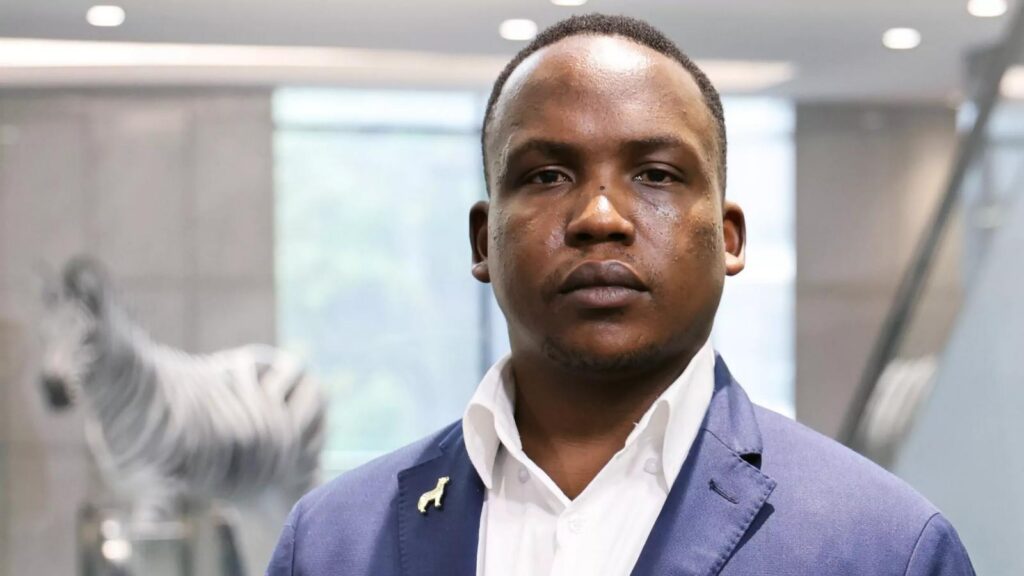
Investec Investment Management’s investment strategist, Osagyefo Mazwai, said this forecast is one of the “high conviction views” of Investec Investment Management’s South Africa Asset Allocation Committee.
“There has been a significant amount of improvement to South Africa’s macro picture,” Mazwai explained.
The bank expects that this improving debt picture will see South Africa get to investment grade status within two years.
“Recent credit rating upgrades and commentary by Moody’s last week that South Africa is on the right track for a rating upgrade likely confirm the plausibility argument, and we believe the path of least resistance is to an investment-grade rating,” Mazwai said.
Investec’s forecast is also based on the execution discipline shown by the National Treasury in terms of fiscal consolidation, as well as South Africa’s exit from the so-called “greylist”.
“The combination of these factors ascribe an above 50% probability of investment grade by 2028 in our view,” Mazwai said.
He added that there are some risks to this outlook, including that the path to investment grade is sensitive to global macroeconomic developments, more so than to local outcomes.
Another risk to Investec’s outlook is the upcoming local government elections, set to be held on 4 November.
“The local government elections in the next few weeks are a risk to the political stability metric usually monitored by ratings agencies,” Mazwai explained.
However, he noted that local government elections tend to be less impactful on the national policy environment than national elections.
“We remain cognisant of the risks around the upcoming election, but the conflicts in the Middle East and Eastern Europe, rising yields, fiscal stresses and monetary policy tightening globally are among the key external risks.”
What South Africa needs to get right
Mazwai explained that, if South Africa wants to reach investment grade, execution precision by Godongwana and his department will be key.
The Medium-Term Budget Policy Statement (MTBPS), sometimes called the “mini-budget”, will be a key test in this regard.
Godongwana is set to present to the MTBPS on Wednesday, 21 October, and provide an update on the forecasts made in the February Budget.
One of the things Investec will be looking for in this statement is a fiscal anchor, which is something the government has considered implementing since February 2024.
“The de facto fiscal anchor so far has been primary surpluses, which South Africa has achieved for the last few years,” Mazwai explained.
“The current principles-based approach requires government to present a fiscal plan that demonstrates that the debt trajectory is sustainable.”
“The announcement of a more credible and potentially legislated fiscal anchor will be important, and more importantly, will be the expected timing of its implementation.”
He explained that Moody’s, for example, expects South Africa’s primary surplus to be 2% of GDP in 2028, whereas it is currently 1%.
“The fiscal anchor should have a clear debt objective, transparent escape clauses, corrective action when deviations occur, and an enforcement mechanism that remains credible across future administrations,” Mazwai said.
“Agencies will also likely distinguish between structural primary surpluses generated by recurring revenue or primary surpluses driven by mining royalties and commodity sector windfalls.”
Another key point to watch for in the MTBPS will be whether South Africa’s debt can move from stabilisation as a percentage of GDP to reduction.
Mazwai explained that stronger economic growth, seen in higher nominal GDP growth, should drive the debt-to-GDP ratio down, if debt remains stable.
This is one of the reasons the Treasury has been pushing to achieve primary budget surpluses, as this can support reductions of debt.
At the same time, Mazwai said expenditure control will likely assist in managing the net value of debt required in South Africa.
“Current prudent spending control is supportive of South Africa’s debt trajectory continuing to improve into a debt-to-GDP reduction phase,” he said.
The projected R80 billion tax revenue overrun will also support debt-to-GDP reduction.
“However, the revenue overshoot is largely due to mining tax revenue windfalls due to higher commodity prices,” Mazwai pointed out.
“This is a cyclical support to revenues, whereas structural improvements in tax collections will be important as a key underlying characteristic of South Africa’s future debt management ability.”





Comments