One South African miner cut 15,000 jobs and then produced more platinum than ever before


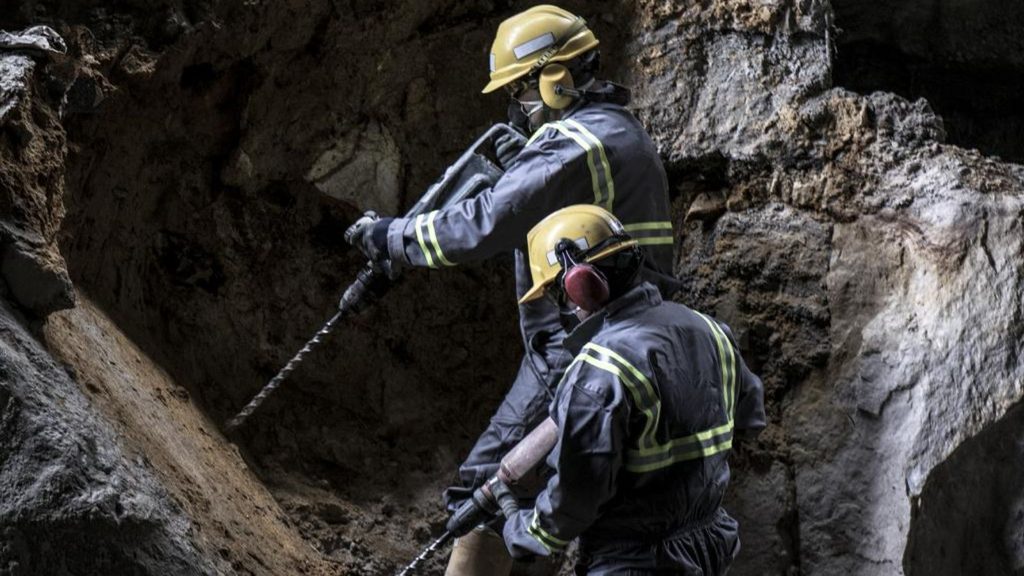
In 2012, Anglo American Platinum (Amplats), now known as Valterra Platinum, had to cut 15,000 workers to take supply out of the market and stay alive.
Two years later, the company was producing more platinum than ever before and is now the world’s largest producer of platinum group metals (PGMs).
This was thanks to the restructuring of the business during its most difficult period, with then CEO Chris Griffith making sweeping changes.
Griffith recalled this period of significant turbulence in a recent discussion with Investec that centred on his long mining career.
The mining stalwart had built his early career at Amplats, rising through the ranks at its Amandelbult mine. Griffith worked underground before moving into the executive suite.
Griffith ran the mine for a few years before being asked to run Kumba Iron Ore in the late 2000s, which operates the huge Sishen mine in the Northern Cape.
He proved to be an astute operator and ensured the mine was run extremely efficiently, enabling it to compete with its Australian peers.
In contrast to the success of Kumba, Amplats began to run into serious trouble in the early 2010s, along with many of its competitors.
Amplats was quickly heading towards bankruptcy, with it completing a R10 billion rights issue in 2010 to stay float.
The company was going to need another cash injection if things did not change quickly, with PGM prices plunging.
Rhodium prices plummeted from $10,000 per ounce to $600 per ounce due to the fallout of the Global Financial Crisis and slowing economic growth.
Griffith said this alone wiped 20% off Amplats’ operating margins. Platinum prices, meanwhile, halved from $2,3000 per ounce to $1,200 per ounce.
“Towards the end of 2012, when most things were recovering, we had the Marikana tragedy. That was very bad for morale in the workforce,” Griffith said.
“At that time, I was asked by Cynthia Carroll, who was Anglo CEO, to come back to Amplats to be its CEO. It was basically bankrupt at the time.”
Cutting 15,000 jobs and saving Amplats
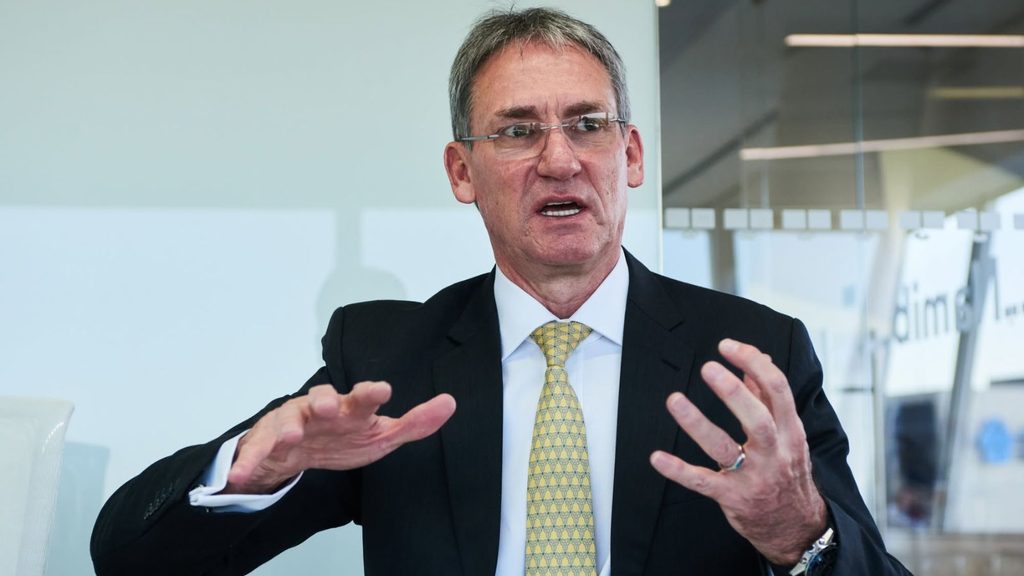
Saving a bankrupt company would be difficult, but in the environment that followed Marikana in 2012, it was nearly impossible.
“We did a lot of work to really understand if this was just one of the normal cycles that you see in mining, or if there were fundamental and structural changes to demand for PGMs,” Griffith said.
“There was a big switch taking place at the time in the auto catalysts from platinum and rhodium to a more palladium-based system.”
So, while platinum and rhodium prices were collapsing, palladium prices were rising, and Amplats had to adapt.
“The auto sector was also in a massive depression, so the demand for PGMs had collapsed. It was clear that we had to take demand off the table,” Griffith said.
This had never happened before in South Africa’s PGM sector. Companies would have to shut down production to bring supply and demand back in line, where PGMs could be profitably produced.
“We were oversupplying the market with loss-making production, so we needed to shut some down. We engaged with labour, but they were unwilling to give up on their demands after Marikana,” Griffith said.
“We entered into the longest mining strike in the history of South Africa, a six-month strike, because we could not give in to those demands.”
This enabled Griffith and Amplats to reset labour relations, eventually allowing supply to be removed from the market.
However, removing supply would mean shutting down mines and shedding thousands of mineworkers.
“I remember taking my executive team around in a minibus, driving around some of the places where our employees resided and showing them that these are our people, and we’re going to put 15,000 people out of work,” Griffith said.
“We looked hard for solutions to provide alternative employment for those people, but ultimately, we needed to shut down a number of mines.”
Amplats took a chainsaw to its costs, saving R3.6 billion in annual spending by shutting down two mines and letting go of 15,000 workers.
“We also fixed every single mine that we kept open so that it was profitable. For example, we doubled production at Mogalakwena, our most profitable operation,” Griffith said.
“A year or two down the line, as things normalised, we had produced more platinum with 15,000 fewer people in the business, showing how much we’d improved productivity.”
Amplats also sold a number of its deep, labour-intensive mines to Sibanye Stillwater.
This transformed the company in the space of a few years into a giant that now controls 40% of the world’s PGM resources and is valued at R338 billion on the JSE.




Comments