Shoprite Checkers, Boxer, SPAR and Pick n Pay fighting over R109 billion market in South Africa


South Africa’s biggest retailers are rolling out liquor stores across the country as this market becomes an increasingly lucrative and competitive battleground.
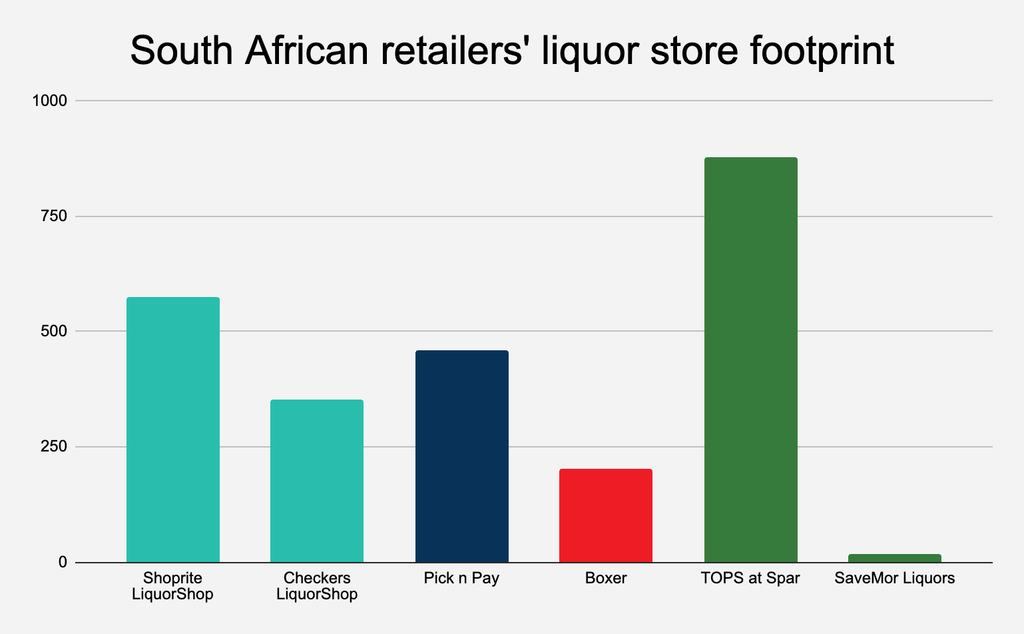
Currently, South Africa’s biggest retailer, Shoprite, leads the pack, boasting 574 Shoprite LiquorShops and 352 Checkers LiquorShops.
This was revealed in a recent Daily Investor analysis of four retailers’ liquor store footprints in South Africa, using figures from each company’s latest full financial year.
For years, Spar dominated this category, with its TOPS at Spar brand alone having 879 locations across South Africa in the 2025 financial year.
However, in recent years, Shoprite’s continued expansion across South Africa saw the retailer catch up and overtake Spar.
In its 2026 financial year, Shoprite boasted 926 liquor stores, consisting of 574 Shoprite LiquorShops and 352 Checkers LiquorShops.
It is followed by Spar, which has 897 liquor stores in its network, including 879 TOPS stores and 18 SaveMor Liquors.
Pick n Pay ranks third with 549 Pick n Pay Liquor stores in the 2026 financial year.
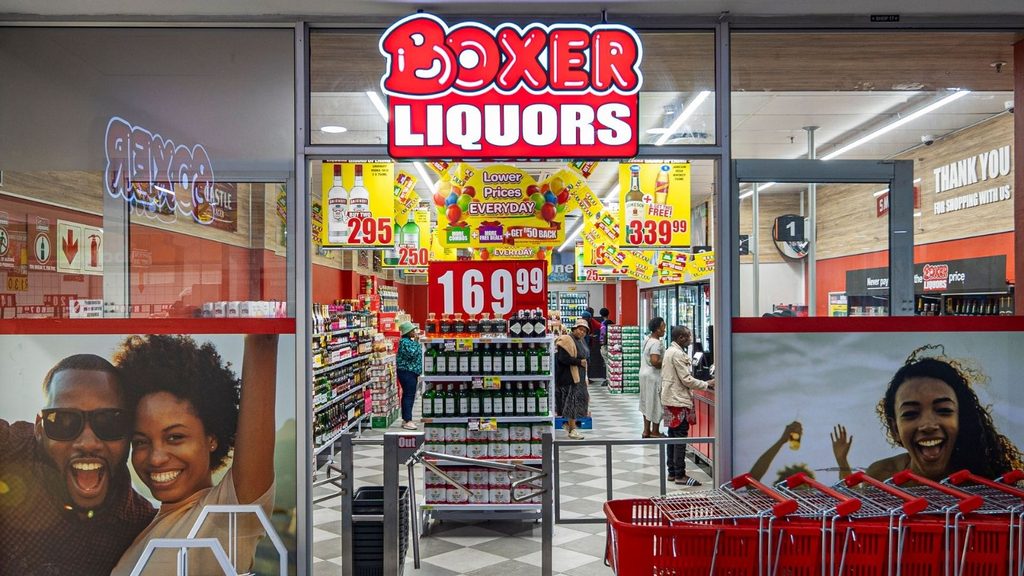
This leaves Boxer in fourth place, with the retailer’s ambitious store roll-out programme having expanded its liquor store footprint to 202 stores in the 2026 financial year.
While it is currently in fourth place, Boxer takes a unique approach to its liquor store rollouts compared to South Africa’s other retailers.
Boxer makes liquor stores a top priority, aiming to have one accompany each new grocery store it opens.
This has led to Boxer’s store base going from 58% of stores having an accompanying liquor store in FY2026 to 64% in the first half of its 2027 financial year.
This means Boxer could soon catch up to the incumbents, as its store estate has doubled over the past six and a half years, with few signs of slowing down.
Woolworths was not included in this comparison because it does not report the figures for its stand-alone liquor store concept, WCellar, which was launched in 2021.
What makes the liquor market attractive
Following the release of Boxer’s results for the first half of the 2027 financial year, CEO Marek Masojada told Daily Investor why the liquor market is so attractive to local retailers.
One reason has to do with South African law. The National Liquor Act prohibits the sale of any alcoholic beverages other than natural wine on the main grocery floor.
“So, effectively, you have to have a separate store if you want to sell liquor at all,” Masojada said.
This makes it more convenient for customers, who can shop for liquor and groceries within the same area if the retailer has a liquor store next to their grocery stores.
“That’s what we’re after: convenience. Customers want to do both at the same time,” Masojada explained.
The market value is also a drawcard in itself. According to Rethink Your Drink, South Africans spend R150 billion on alcohol every year.
Trade Intelligence said that, in 2025, South Africa’s off-trade liquor market increased 4.2% to R109 billion.
“It’s a significant contributor to our turnover and our profitability at the moment,” Masojada said.
“It gives you another category where you can utilise the overhead of having a store with bigger turnover, because although they’re two separate shops, the infrastructure behind it is the same.”
Otto1890 senior equity analyst Alec Abraham told Daily Investor that liquor is also a higher-margin business compared to food and groceries.
Masojada noted that not all liquor stores are created equal, and significantly higher margins are not guaranteed.
In Boxer’s case, the retailer does not sell the “fancy” wines found in other liquor stores, focusing instead on high-volume, lower-margin products like beer.
“In our world, it’s quite a tough business because we don’t sell fancy wines where you make huge margins,” Masojada said.
“We’re in the high-volume, low-margin beer and spirits game, and it’s obviously a highly sought-after item, so theft and all of those things play a role too.”
“But it’s a very important part of our business, and it gives us another growth lever. When other parts of our business are growing more slowly, we’re very thankful to have the liquor component.”
Abraham added that the local liquor market remains quite fragmented, giving retailers scope to take market share as the segment consolidates.





Comments