Second-time lucky in the United States for Discovery


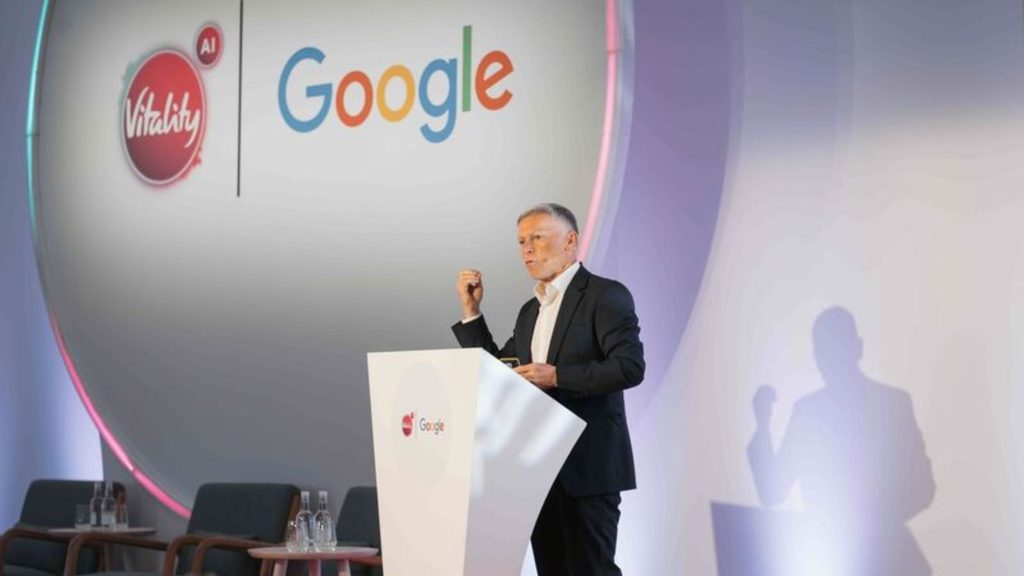
Discovery is having its second go at penetrating the United States health insurance market through its Vitality AI partnership with Google.
The expansion through a partnership with one of the world’s largest companies is different from Discovery’s first attempt to crack America with Destiny Health.
It also comes after proof that the Vitality model is repeatable in markets outside of South Africa, with successful partnerships in Asia, including major wins with Ping An in China.
In his book, The Four Principles, Gore recalled how Discovery decided to launch Destiny Health in the United States amid rapid economic growth.
“The boldness of what it would take to build a new health insurance company in the US was symptomatic of a young and maybe overconfident founding team,” Gore said.
This was a different environment from the one in which Discovery itself was launched in South Africa during the transition from apartheid to democracy.
When the environment is overly negative, it is easier to start a business and make it a success, Gore argued, as assets are cheap and competitors are distracted.
Destiny Health was built on a sound plan: export Discovery’s health technology and intellectual property (IP) using an American team to break into the US market.
One thing the strategy did not forecast was that the US economy was doing too well, with competitors focused purely on pricing.
This made their scale invaluable, and Destiny Health was unable to match the pricing of its biggest competitors.
While it was only off by a few basis points, the difference was enough to make it impossible to gain market share.
“Despite the incredible product offering, energy, and brilliance of the team, we slowly – then rapidly – moved to an exit,” Gore said.
“The economic environment was hugely favourable – and ironically it was this factor that had created the forces and competitive forces that led to our failure.”
Discovery exited the United States in 2008 after incurring $100 million in losses. This equates to R700 million at 2008 exchange rates.
Having another go at America
The US health insurance market is the largest in the world, valued at $130 billion by Discovery.
This makes it lucrative for the company as it seeks to reach its ambitious 2029 targets, which will effectively double its size.
To get this right, its bank has to reach R3 billion in profit, which it is on track to do, and Vitality Global has to gain meaningful traction in the United States.
Vitality has had a long-standing partnership with John Hancock in the US market, but Gore says this presence is of suboptimal scale.
“We have been there for a long time with a suboptimal-scale business with Vitality, dealing with health plans and employers,” Gore said.
Gore said the target for the American business is to reach $100 million in revenue in the coming few years. Crucially, however, this bet will not break the bank.
“This is a much bigger step, but it is a very measured approach. We are not betting the house here. This is a low-capital, high-IP business,” Gore explained.
“The market is so big that if we can get a foothold, it makes a massive difference. I think given the scale of the market and our model, we are very excited about it.”
“I don’t think it’s a do-or-die situation, but there is a lot of activity in the market, and we must close it down. This part of the business should get to $80 million to $100 million in profit by 2029.”
Vitality has gone on an acquisition spree in the United States to gear up for this launch, buying WellSpark, Ramp Health, and Icario in the past year.
Icario was an important acquisition as it opens the door for Vitality to gain exposure to the US government’s health insurance plans.
It also adds 11 million lives to Vitality’s American business, enhancing its scale and premium base.
On 22 September, Gore revealed the Vitality AI partnership with Google in the United States during a presentation at the tech giant’s New York offices.
“What we have now in the US and the AI partnership with Google is in the right form. We have made important steps in the American healthcare space,” Gore said.