South Africa’s government is creating a new illicit economy



Industry stakeholders have argued that South Africa’s high excise duty on vaping products is causing a new illicit market to emerge.
South Africa already has an enormous illicit tobacco market, with illegal products making up 75% of the local cigarette market.
Now, stakeholders are concerned that the same will happen to electronic nicotine and non-nicotine systems if the government does not step in.
This was revealed in the National Treasury and the South African Revenue Service’s presentation to the Standing Committee on Finance.
This presentation, made on 14 October, detailed the two agencies’ responses to public comments on the 2026 Draft Tax Bills.
Some of the comments centred on the excise duty levied on electronic nicotine and non-nicotine systems, also called vaping products.
Industry stakeholders cited studies from independent sources and research commissioned by British American Tobacco in their comments.
This research indicated that the excise duty South Africa levies on vapes is too high from a comparative, risk-based perspective.
The Treasury first expressed interest in taxing vaping products in 2020 due to growing global health concerns.
It released a discussion paper on the topic a year later, and launched public consultations shortly after.
Following the consultations, the government proposed a flat excise duty of R2.90 per millilitre on nicotine and non-nicotine liquid solutions.
This tax, officially set at R2.90 per millilitre, was introduced and came into effect on 1 June 2023.
Since then, it has been raised in line with inflation at every annual budget. The February 2026 Budget raised the excise duty to R3.29 per millilitre.
The industry stakeholders argued that this excise duty is too high and, as a result, South Africa is now seeing the first signs of illicit trade in vaping products beginning to emerge.
They recommended that the government lower the excise duty on vaping products and adopt a “Tobacco Harm Reduction” approach.
Stakeholders argued that vapes are lower-harm alternatives to traditional combustible cigarettes, and taxing them accordingly would encourage smokers to switch.
South Africa’s vaping industry
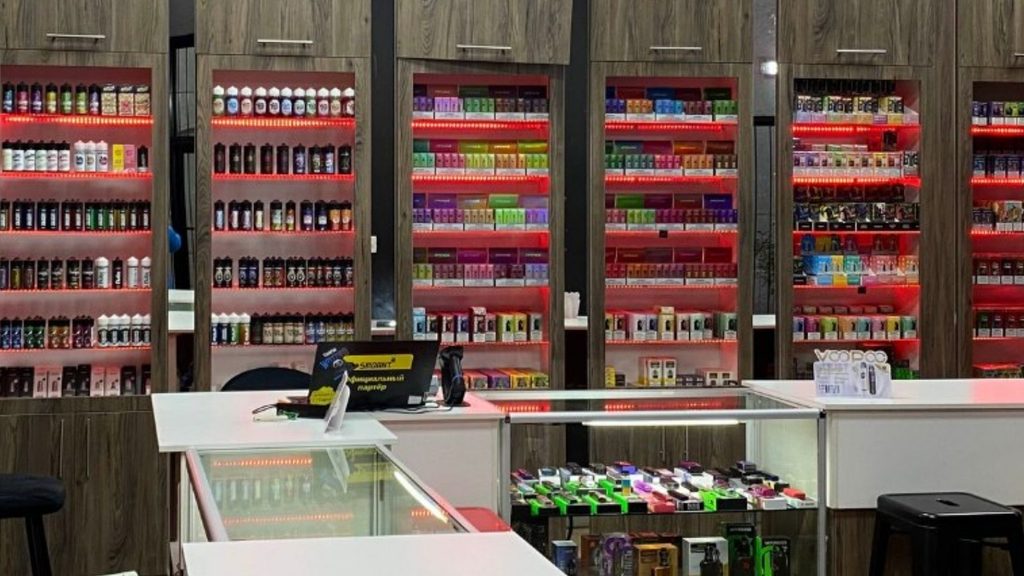
The National Treasury noted these stakeholder comments, but highlighted that excise duties on vapes were only recently implemented.
While some industry stakeholders see vaping as a safer alternative to products like cigarettes, other organisations have argued the opposite.
For example, in 2025, the Cancer Association of South Africa said that vaping is not a safe option for young people or adults.
“In spite of claims that vaping is a ‘harmless alternative’ to smoking, there is ever-increasing evidence of serious health risks,” CANSA’s Tobacco Control Programme Coordinator Minenhle Dlamini said.
“These risks include nicotine addiction, lung damage and the increased likelihood of moving onto traditional tobacco products.”
Despite these warnings, South Africa’s vaping industry has continued to grow year-on-year.
P&S Market Research found that South Africa’s e-cigarette market was worth $204.4 million (R3.39 billion) in 2025.
The market is projected to grow to $410.2 million (R6.81 billion) in 2030, implying a compound annual growth rate of 15%.
However, the firm noted that the presence of numerous unorganised tobacco companies poses a major challenge for established players in this market.
“Like much of the continent, illegal tobacco trade is rampant in South Africa, something the government has failed to fully curtail,” the firm said.
“This means that despite the regulations, conventional cigarettes are still easily available, which is a problem considering the rising number of young smokers.”
“The high taxes on these products, aimed at discouraging tobacco consumption, have spawned an unregulated black market, which offers cheap conventional and electronic cigarettes.”
UK-based vape manufacturer Airscream has also sounded the alarm about South Africa’s growing illicit vaping market.
“Many of these products originate from overseas manufacturers and enter the market without proper quality checks, ingredient disclosure, or regulatory approval,” it said.
“This creates risks not only for consumers but also for legitimate companies operating within regulatory frameworks.”
The firm pointed to several causal factors, including regulatory uncertainty, strong consumer demand, limited enforcement capacity, and low-cost imports entering informal supply chains.






Comments