The rewards programme paying South Africans R2.4 billion a year for living their lives


FNB’s eBucks rewards programme paid out a record R2.4 billion to clients in the past financial year, bringing the total given back to clients since 2000 to R26 billion.
This represents the steady march of scale, client acquisition, and the development of a rewards ecosystem to serve eight million clients.
However, it also shows how consumer spending has changed and provides insight into the pressure consumers are under.
Head of eBucks Rewards Bathandwa Mbovane explained to Daily Investor that there has been a significant change in how South Africans use rewards in recent years.
“We used to see through our data that a lot of our customers would use their earned eBucks ot spoil themselves on the travel platform,” Mbovane said.
“What we are now seeing is a shift in behaviour to everyday benefits on grocery spend, fuel spend, and the purchase of essentials.”
This reflects the economic pressure on consumers in South Africa, where it has become about maintaining a lifestyle amid slow economic and wage growth.
As such, rewards programmes have moved away from special purchases, such as holiday trips and MacBooks, towards rewarding people for living their lives.
eBucks has also ventured into changing clients’ banking behaviour to reduce their risk by incentivising better credit management.
Mbovane explained that one of the main data points showing the shift towards everyday spending is the burn rate of eBucks.
In the past, the burn rate was below 100% of the earn rate because customers saved up eBucks for big purchases.
For the past financial year, the burn rate exceeded the earn rate for the first time in eBucks’ 26-year history.
“Customers are not holding onto eBucks for too long because they are finding immediate uses for them in their everyday lives,” Mbovane said.
This offers FNB benefits by driving greater client engagement and spending through cards and digital channels.
“The more they spend their eBucks, the more they want to earn them, which drives usage of cards,” Mbovane said.
“We want this because we are competing to be at the front of the client’s wallet. We have seen a nice increase in card usage across FNB and RMB as a result of eBucks.”
Partnerships are the name of the game
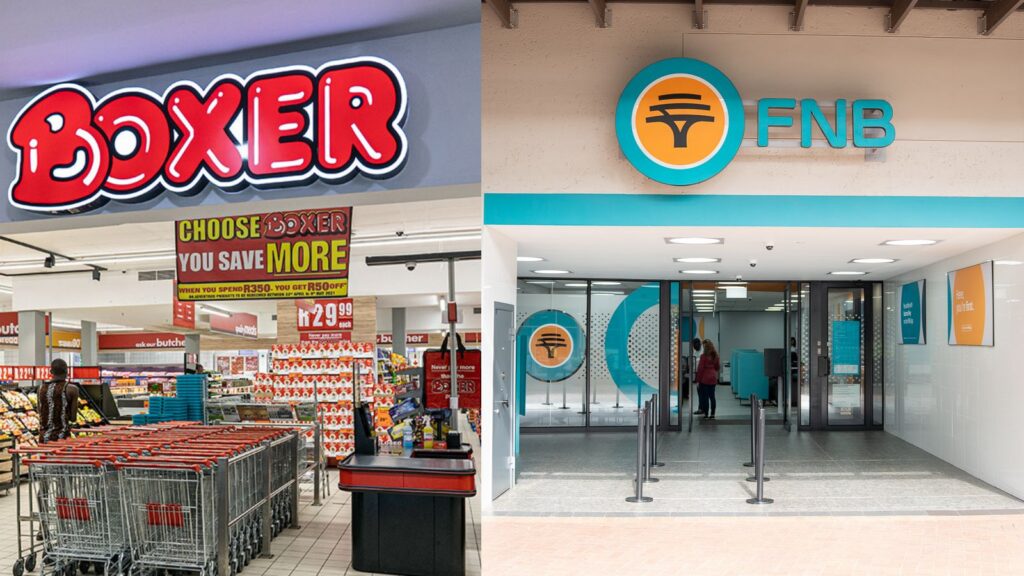
The shift in spending behaviour has also been driven by changes at eBucks, moving away from isolated rewards toward deliberate partnerships with specific retailers and businesses.
This has been to meet customers where they are, but also to improve outcomes for eBucks itself and use it to bring customers into the FNB ecosystem.
A clear example of this is the partnership with Boxer, which aims to help FNB penetrate lower-income market segments.
“The partnerships have become deeper because they became symbiotic at some point in time,” eBucks Rewards head of growth and partnerships Tilene Narainan said.
“This happened because we need to make sure that there is value for the customer, value for the partner, and value for the bank.”
The change has also been driven by consumers, who want more immediate, tangible value that can only be provided through a deeper partnership.
An example of this is the 99-cent loaf of bread available to eBucks customers at Pick n Pay and Boxer.
This provides tangible rewards for being an FNB client and, in the words of CEO Pieter Woodhatch, “enables customers to feel, smell, and taste the value”.
“With us expanding the 99-cent loaf of bread into Boxer and across Pick n Pay, it again goes into simplifying it for the customer,” Narainan said.
“This makes sure that the rewards are real and felt, but also consistent, which helps us to drive loyalty and engagement.”
Mbovane said this is critical to making the eBucks ecosystem work for FNB, with it helping to keep customers with the bank and become main-banked.
This is vital for a retail bank like FNB, which is competing for customer spending and deposits in a world where clients are multi-banked.
The key in this situation is to be the primary bank for that client, with data showing these clients have up to five times the number of products to a normal client.
“There is definitely a stickiness ot the partnerships and, as customers become aware of the value, it motivates them to continue with that behaviour,” Mbovane said.
As one progresses through the eBucks tiers, these clients are four times more active than ordinary customers of the bank.
This geneates significant fee and commission income, which is highly lucrative as it does not consume much capital relative to lending.
 Loading ...





Comments