Capitec coming after South Africa’s R50 billion goldmine


The expansion of Capitec’s stokvel offering will see the company step on FNB’s toes in the coming years.
The two South African banking giants are targeting similar markets with a similar product, and Capitec is well aware of the threat it poses.
At Capitec’s interim results presentation on Wednesday, 30 September, it outlined expansion plans for its personal and business banking offerings.
One notable addition was Capitec’s launch of a Stokvel account on 10 September 2026 to tap into South Africa’s community savings culture.
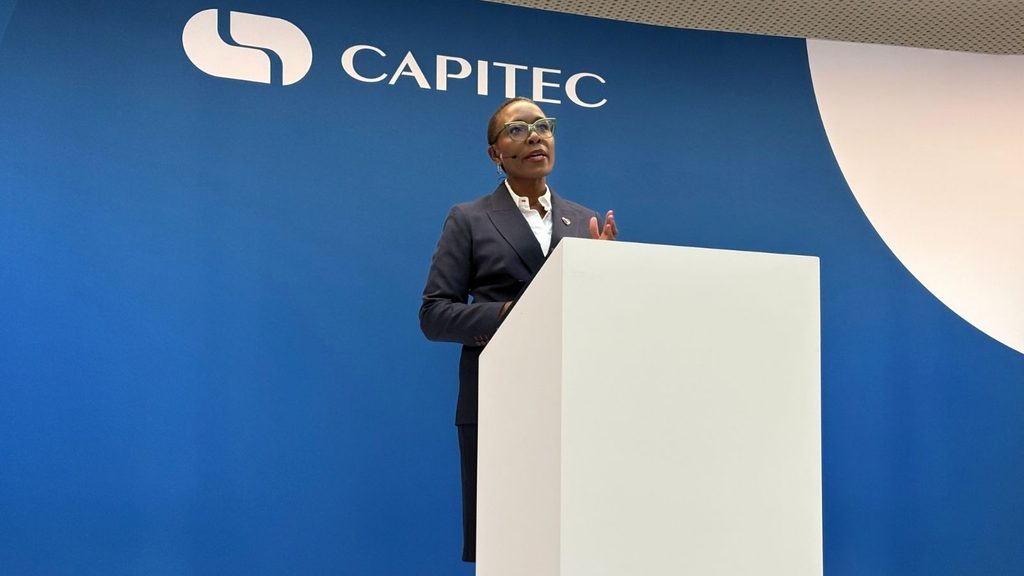
In the results presentation, Capitec Personal Banking executive Basani Maluleke outlined the opportunities available in the local stokvel market.
According to the National Stockvel Association of South Africa (NASASA), there are 800,000 stokvels with 11 million members contributing R50 billion annually.
Stokvels have been a popular method of saving in South Africa for well over a century, rooted in the “stock fairs” of the Eastern Cape.
These were rotational cattle auctions held by English Settlers in the Eastern Cape in the 19th century.
Indigenous South Africans adopted this concept to pool resources, buy livestock, and build alternative financial networks under colonial rule.
Stokvels continued to rise in popularity under apartheid, when black South Africans were largely shut out of formal banking institutions.
In 1988, NASASA was founded by Andrew Lukhele to advocate for stokvels, which were facing legal challenges under the Apartheid government that viewed them as illegal, unlicensed “banks”.
In 1990, NASASA scored a significant victory when the Reserve Bank granted stokvels an exemption from the Banks Act, provided they are registered with the organisation.
This positioned registered stokvels as a valid means of saving in South Africa, while also paving the way for formal banking institutions to enter what had become a lucrative market.
Today, South Africa’s stokvel market has expanded beyond basic survival and burial societies to include high-value investments such as property, unit trusts, and shares on the stock exchange.
FNB vs Capitec

FNB has been a major player in the local stokvel market for well over two decades.
In fact, FNB has been credited with modernising traditional group savings in South Africa by formalising stokvels through regulated, low-cost bank accounts.
The group introduced dedicated group savings accounts designed for stokvels and burial societies in the early to mid-2000s.
These early products allowed customers to deposit pooled funds into structured bank accounts.
It offered added security and interest-bearing structure to a method of saving that has been used in South Africa for over a century.
In 2020, FNB took things a step further by launching its fully integrated Digital Stokvel Account within the FNB app, allowing stokvels to handle all administrative tasks online.
Adoption of this product surged during the Covid-19 pandemic, with contributions growing significantly as members took advantage of the available digital options.
In 2025, FNB reported that its total stokvel deposits reached R13.3 billion in December 2024, marking a 66% year-on-year increase.
The bank also reported in 2025 that more people are joining stokvels through FNB, with the total number of FNB Stokvel Account members growing by 34% in just one year.
However, Capitec does not appear intimidated by FNB’s dominance in this market, believing its Stokvel offering can take the market by storm.
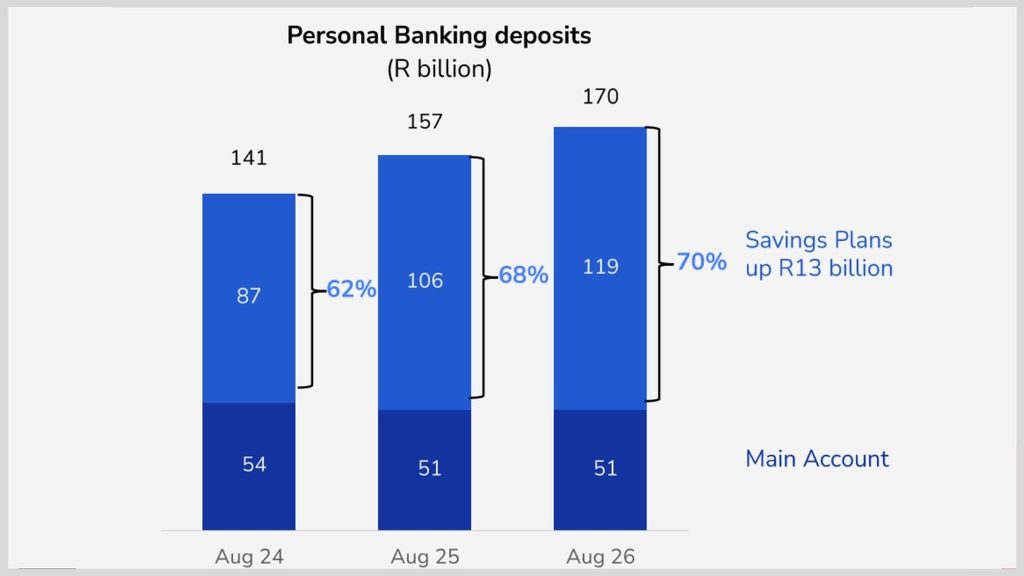
Capitec’s results for the six months through August 2026 revealed that its personal banking business now holds R170 billion in deposits.
70% of this total is held in savings plans, up by R13 billion year-on-year to reach R119 billion.
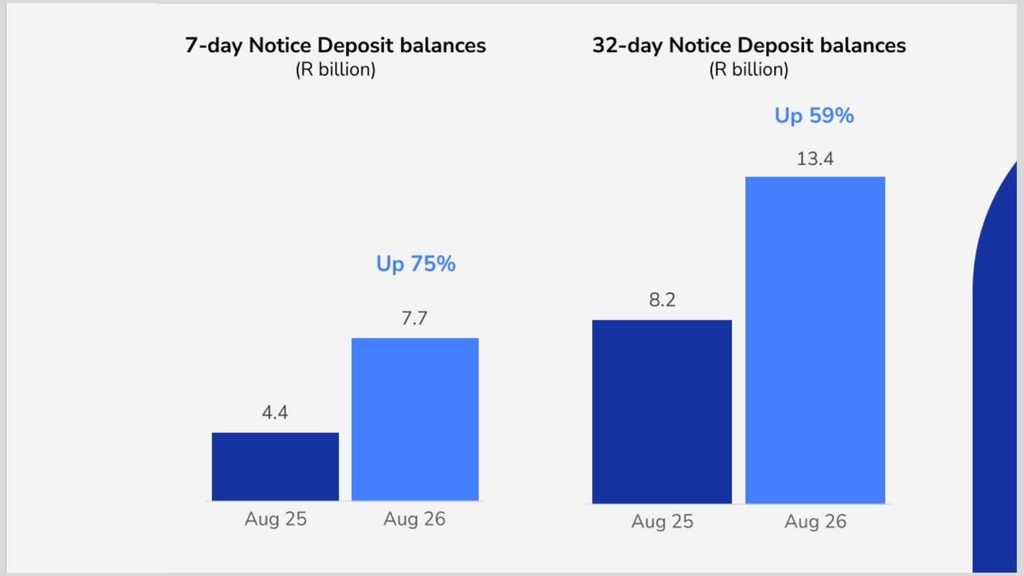
The bank saw particularly strong growth in Notice Deposit Savings, which expanded to account for 12% of total Personal Banking deposits.
Its 7-day Notice Deposits surged 75% to R7.7 billion, while 32-day Notice Deposits grew by 59% to R13.4 billion.
Maluleke said this take-up saw Capitec’s market share in fixed and notice deposits expand by 13%.
Now, Capitec hopes to do the same with its Stokvel account, which will integrate directly into Personal Banking.
Maluleke explained that the bank has wanted to tap into this market for some time, and that Capitec’s Stokvel account has been “in gestation for a good two years”.
“We are finally very happy to allow it out into the world,” she said. “While we’re not the first to launch a stokvel, we definitely will be the best.”






Comments