Reserve Bank Governor shares good news about inflation


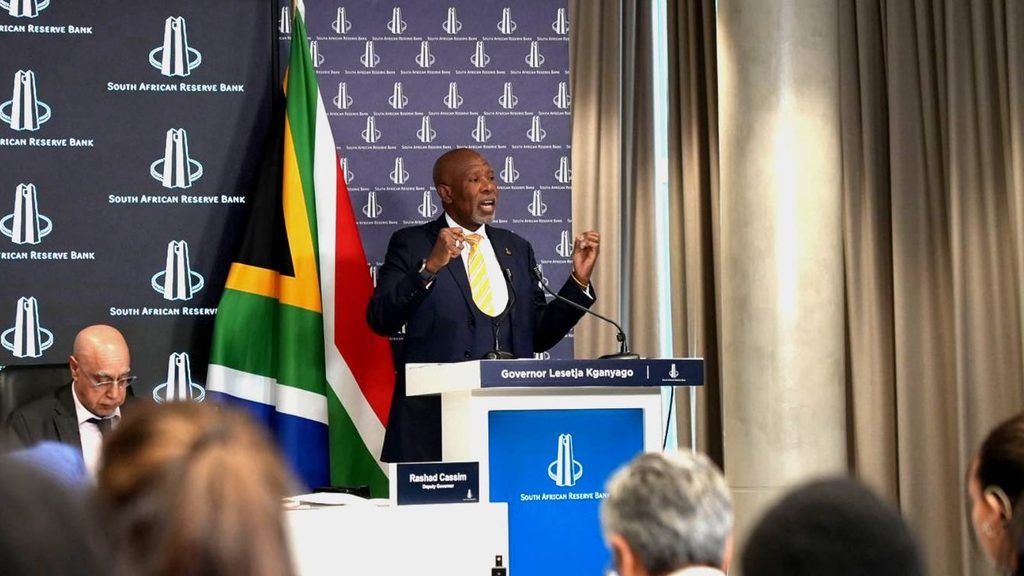
The South African Reserve Bank expects inflation to cool sharply and return to its 3% target by the end of next year, Governor Lesetja Kganyago said.
In a speech on Monday highlighting the cascading blows to the global economy, Kganyago said tighter monetary policy would help cool inflation, which has been above the SARB’s goal since March.
The rise in inflation has been driven by supply constraints stemming from the wars in Ukraine and Iran, which have kept energy prices elevated.
“We expect inflation to slow significantly next year, and we have increased our policy rate to make sure we get back to 3%,” he told the Mistra Forum in Johannesburg, according to his speech text.
“We currently expect to get there around the end of next year.”
The central bank raised rates by 25 basis points to 7.25% last week in response to large and sustained geopolitical shocks that it said were now more likely to trigger second-round effects and could entrench inflation.
“It has been about six months since we last hit our inflation target,” Kganyago said.
“I am not happy that we are missing — but six months is a lot better than 67 months, which is the interval since US inflation was last at target.”
The SARB adopted the 3% target last year, replacing a 3%-to-6% range that had been in place since 2000.
The shift has helped shield South African assets from a global bond repricing that’s seen US long-dated yields hit their highest levels since 2007 this year.
“Because our country risk premium has fallen, our longer-term borrowing costs are not rising in line with rich country benchmarks,” Kganyago said.
“We are also seeing that the rand is holding up well, with unusually low volatility.”
Still, South African economic growth remains tepid. The economy has expanded by less than 1% on average over the last decade and contracted by 0.2% in the second quarter.
This reflects the weakness of underlying growth which means it doesn’t take much of a shock to push the number below zero, said Kganyago.
“There is a reform agenda, with good priorities, but progress is gradual — and there are strong headwinds,” the governor said.
These include the war in Iran and rising costs, even as other areas, including reliable electricity supplies after years of daily power cuts, have improved.
“The bad news offsets the good news. If we are going to get back to growth, we will need more good news than bad.”
 Loading ...


Comments