The R708 billion gaming powerhouse behind one of South Africa’s most valuable companies


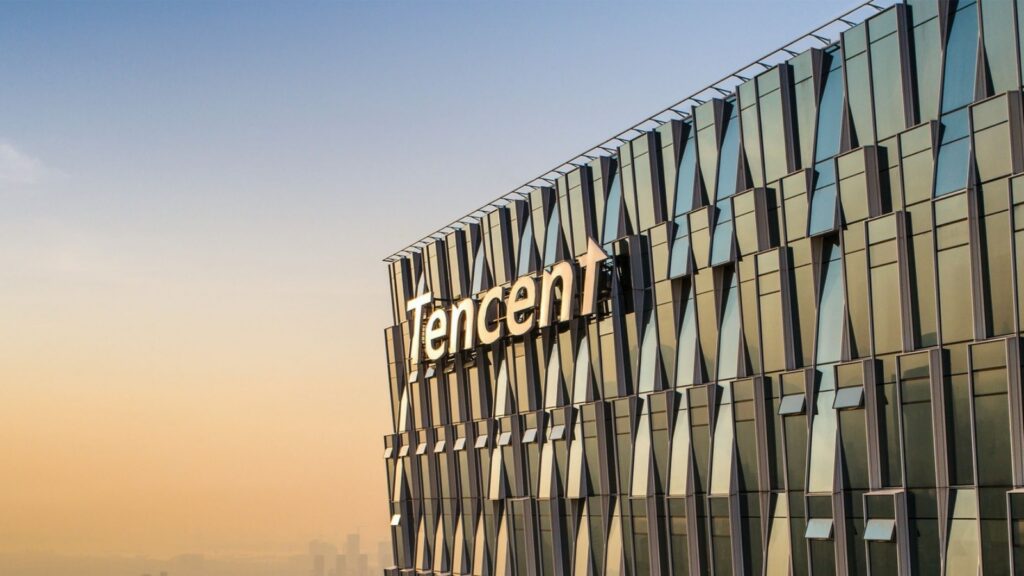
Naspers’ decision to invest in the Chinese technology conglomerate Tencent 25 years ago proved to be one of the most profitable investments a South African company has ever made.
Founded in 1998, Tencent has grown into one of the world’s highest-grossing multimedia companies, currently valued at HK$4.01 trillion (R8.38 trillion).
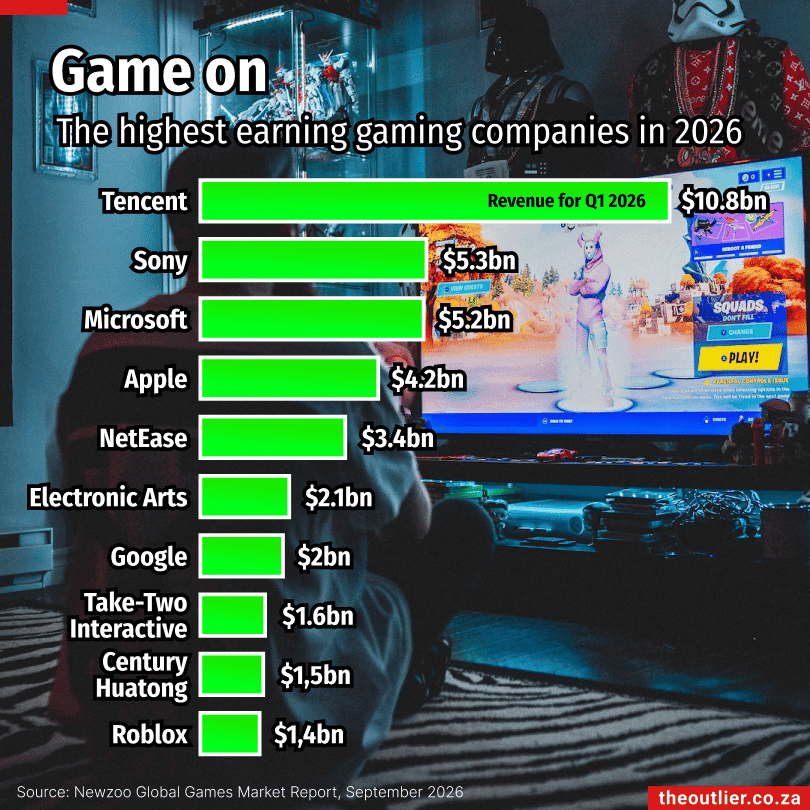
The latest Newzoo Global Games Report for 2026 revealed that Tencent generated $10.8 billion (R177 billion) in revenue during the first quarter of the year.
This is more than the next two companies combined, with second-place Sony earning HK$5.3 billion (R86.92 billion) and third-place Microsoft earning HK$5.2 billion (R85.28 billion).
At its current pace, Tencent will generate HK$43.2 billion in revenue in 2026, translating to R708 billion for the full year.
Through its equity investments into the video game industry, the Shenzhen-based firm is now the world’s biggest gaming company by revenue.
One of Tencent’s most notable acquisitions was Riot Games, the developer behind the highly successful e-sports titles League of Legends and Valorant.
Tencent acquired a 93% ownership stake in Riot Games in 2011 for US$400 million (R6.57 billion), purchasing the remaining 7% for an undisclosed amount two years later.
The company also purchased an 81.4% stake in Finnish mobile game developer Supercell, the studio behind Clash of Clans, in 2016. The deal was valued at €8.4 billion (R156.66 billion).
Tencent also holds major and minor stakes in 30 gaming companies in China and internationally.
These include French publisher Ubisoft, known for the Assassin’s Creed series of games, and Epic Games, famous for the highly popular game Fortnite.
Aside from gaming, Tencent is well known as the company behind the widely used Chinese social networking platforms QQ (formerly OICQ) and WeChat.
The company has also expanded into industries such as music, film, television, streaming, virtual reality, comics, e-commerce, healthcare, and more.
The Naspers deal
In the late 1990s, Naspers was looking to expand beyond its traditional print media roots, with an increased focus on digital businesses.
The company launched both the digital media company Media24, owner of the digital news site News24, and the online retailer Kalahari.com in 1998.
In May 2001, Naspers sent an investment team to China to identify internet investment opportunities to help modernise the South African firm’s operations.
The team came across Tencent through its OICQ instant messaging service, which had garnered millions of young users in China since its launch two years prior.
Despite the popularity of OICQ, Tencent had remained unprofitable up to that point, as mobile phones were not yet widely adopted, limiting OICQ access to Internet café PCs.
Seeing the potential in the startup, Naspers agreed to acquire a 46.5% ownership stake in Tencent, valued at US$32 million (around R260 million) at the time.
This deal is considered one of the most successful venture capital investments in South African corporate history and made Naspers one of the most valuable companies in the country.
At the time of writing, Naspers has the third-largest market capitalisation among South African companies on the JSE, at R541 billion.
In 2004, Tencent listed on the Hong Kong Stock Exchange at HK$3.70 per share, raising a total of HK$1.55 billion.
At its peak, Naspers’ stake in Tencent was worth US$200 billion (R3 trillion), where it now hovers around US$115 billion (R2 trillion).
Since March 2018, Naspers has gradually reduced its investment in Tencent through its subsidiary, the Netherlands-based holding company Prosus.
Today, the two companies hold a 23% stake in Tencent. While this represents less than half of the stake it initially bought, Naspers remains Tencent’s largest shareholder.
 Loading ...



Comments