Government failures destroyed 2,150 highly skilled jobs in South Africa


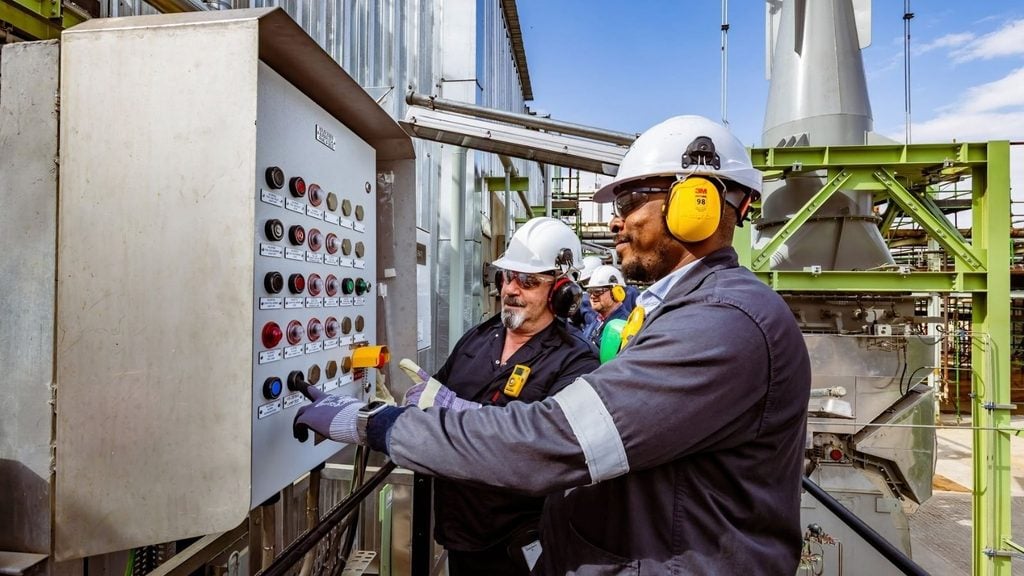
The closure of refinery plants in South Africa over the past decade led to the loss of 2,157 direct jobs.
A major driving factor behind these closures was regulatory uncertainty and the high compliance costs related to government policy.
In particular, the implementation of the Clean Fuels II emission standards, which was delayed from the early 2010s to 2027, created significant uncertainty for refinery operators.
These standards required huge capital upgrades on already thin operating margins, making many refinery operations commercially unviable.
This was revealed in an economic bulletin released by researchers from the South African Reserve Bank on South Africa’s refinery closures and their macroeconomic impact.
The bulletin, which was released in September 2026, was authored by researchers Mathias Manguzvane, Palesa Mnguni, Mapule Mofokeng, and Nkhetheni Nesengani.
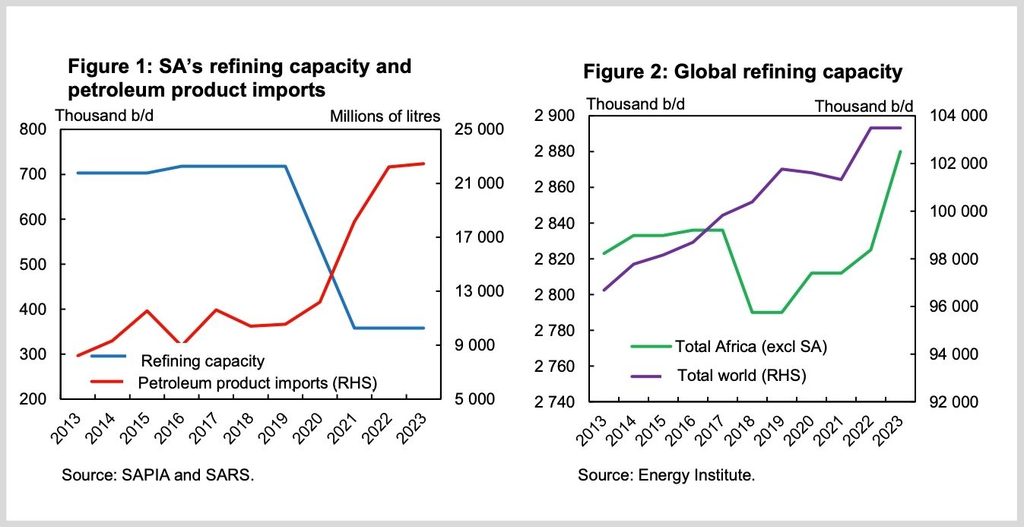
The researchers explained that over the past decade, South Africa has gone from supplying sufficient fuel to being heavily reliant on imports to meet domestic demand.
South Africa’s refining output has dropped to 25,000 barrels per day, which is less than half its installed capacity of 525,000 barrels per day.
Including the country’s coal-to-liquid and gas-to-liquid facilities, South Africa has an installed capacity of 720,000 barrels per day.
However, due to the closure of four major refineries over the past few years, including SAPREF and Enref in Durban, PetroSA in Mossel Bay, and Natref in Sasolburg, South Africa is not producing anywhere near that amount.
These refineries have either been closed entirely or converted into different assets. This has resulted in South Africa losing 450,000 barrels per day worth of refining capacity.
Now, active domestic refining is concentrated at only two remaining refineries: Sasol’s Secunda plant, with a capacity of 150,000 barrels per day, and Astron Energy’s Cape Town plant, with 100,000 barrels per day.
The reasons for South Africa’s lost refining capacity
The researchers explained that the closure or conversions of major refineries over the past few years are due to various reasons.
Some experienced temporary shocks, such as fires, unplanned outages, and feedstock interruptions, which precipitated shutdowns.
However, the researchers explained that these events occurred in an environment where the economic case for rebuilding or reinvesting had already deteriorated.
“South Africa’s decline in refining capacity reflects persistent cost disadvantages and long-running tensions around cleaner-fuel regulation,” they said.
This means the temporary operational shocks acted as catalysts rather than primary causes.
“Domestic refineries are generally old, relatively small and costly to operate by international standards,” they said.
This leaves them structurally disadvantaged compared to large, integrated facilities that dominate global refining capacity.
“These underlying constraints weakened the commercial viability of continued operation and reinvestment well before individual facilities experienced acute disruptions,” they said.
The researchers explained that a central factor that made local refineries commercially unviable was the prolonged uncertainty surrounding the Clean Fuels II programme.
Announced in the early 2010s, this programme’s implementation timelines were repeatedly revised.
It was initially meant to be implemented in 2017, then the deadline was pushed to 2023, and later to 2027.
The researchers said this led to sustained uncertainty about compliance timing and cost recovery.
“Meeting CF2 standards would have required substantial capital outlays at facilities already operating on thin margins,” they said.
“Refiners consistently indicated that such investments were not commercially viable without mechanisms to recover compliance costs, which remained unresolved over time.”
Another regulatory policy that made refineries too expensive to operate was mandatory stockholding, which increased ongoing operating costs and tied up essential working capital.
“These regulatory pressures interacted with broader commercial constraints,” the researchers said.
“Refining margins were depressed for extended periods, limiting the scope for internally funded upgrades, while ageing capital stock raised maintenance costs.”
“In this environment, several firms opted to exit refining and convert assets into import or storage terminals rather than commit new capital.”
Job losses
Simply put, the researchers found that South Africa’s regulatory environment created weak investment incentives, making rebuilding or upgrading facilities commercially unattractive.
“The resulting contraction in refining capacity therefore represents a structural shift in investment behaviour, shaped by long-running regulatory uncertainty, rising costs and limited economies of scale,” they said.
The closure of these refineries had devastating consequences for skilled jobs in the industry.
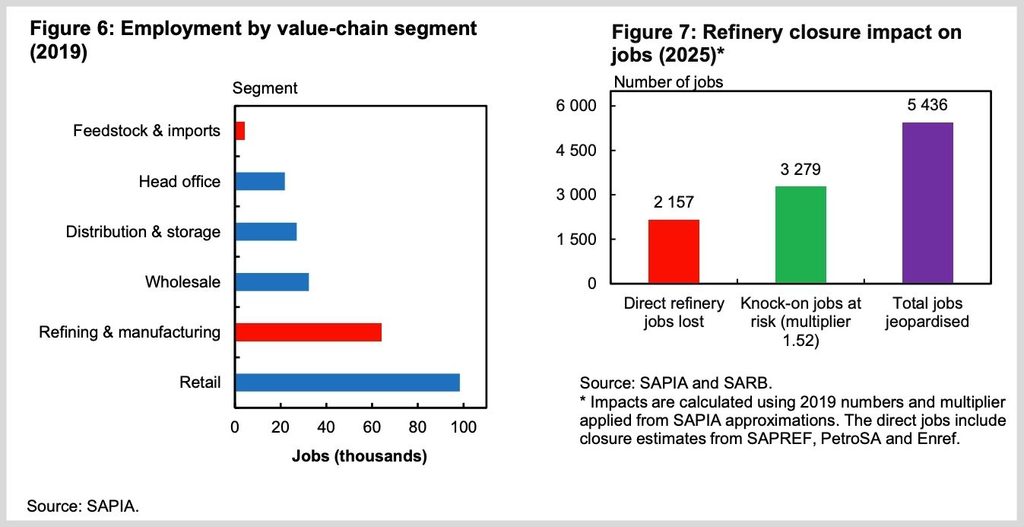
The researchers estimated that direct facility retrenchments and indirect knock-on effects throughout the downstream supply chain displaced 5,436 jobs.
Direct refinery job losses were estimated at 2,157 positions, disproportionately impacting highly skilled technicians, engineers, and operators.
Downstream effects of the closures put an additional 3,279 indirect supply chain jobs at risk, bringing the total number of jobs affected to 5,436.
The researchers said the composition of activity amplified these losses, as closures shifted work from labour-intensive refining to import/storage operations that employ far fewer people.
For example, they said that in 2019, there were 64,121 jobs in refining compared to 4,167 in feedstock/imports.
However, as South Africa has become more reliant on imports, the sector’s overall employment footprint has shrunk, and high-skill roles in plants have declined.
KwaZulu-Natal’s South Durban Basin, where refinery-linked employment previously anchored local economies, was particularly hard hit.
To make matters worse, the researchers said reemployment to date has been limited.
“While the literature highlights potential transition pathways for refining workers, practical reskilling and redeployment initiatives remain limited in scale,” they said.
This suggests that employment losses are unlikely to be quickly reversed through reemployment in related sectors.






Comments