The government spent R1.8 billion on a project which is 15 years late without any end date in sight


South Africa’s Broadcasting Digital Migration (BDM) programme was set to be completed in November 2011.
It is not 15 years later, and the Communications and Digital Technologies has spent R1.8 billion on dual illumination with no end data in sight.
The digital migration process refers to moving television broadcasting from traditional analogue signals to Digital Terrestrial Television (DTT).
This has many benefits, including freeing up valuable radio frequency spectrum for mobile telecommunications, which will make mobile data cheaper.
In South Africa, this process started in 2001 when former Communications Minister Ivy Matsepe-Casaburri appointed the Digital Broadcasting Advisory Board (DBAB).
In 2007, the Cabinet approved switching on the digital signal on 1 November 2008 and switching off the analogue signal in November 2011.
It was all systems go, and one Communications Minister after another promised South Africans that they were on track to meet the deadline.
However, they missed the November 2011 deadline and the International Telecommunication Union’s (ITU) deadline of 17 June 2015.
Since then, the Department of Communications has set one new deadline after another for switching off the analogue signal, but has missed them all.
To put this situation in perspective, since the digital migration programme was announced, South Africa has had fifteen communication ministers.
Many of them said that the digital migration programme was on track. However, none of them delivered on their promises.
This failure has cost South Africa billions in lost revenue, stifled competition in the TV sector, and resulted in higher mobile data prices.
R1.8 billion spent and 15 years late
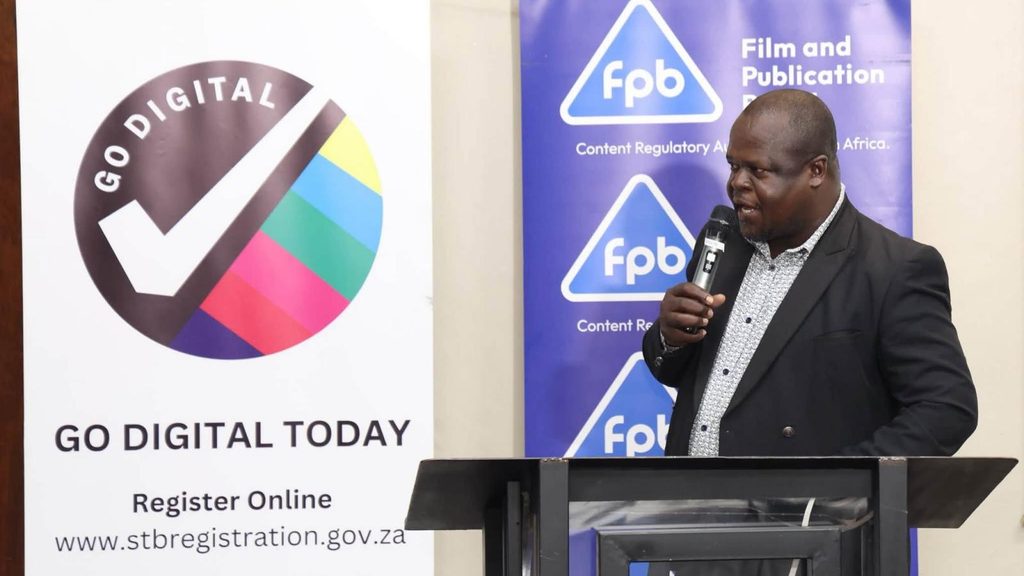
A recent Parliamentary question by a member of the National Assembly, Mzoleli Mrara, shed light on the problems with the Digital Broadcasting Migration.
Mrara asked the Minister of Communications and Digital Technologies, Solly Malatsi, what the current national analogue switch-off date is.
He further asked about the number of qualifying indigent households in each province that are still awaiting government installation.
Mrara also wanted to know what the cumulative expenditure incurred on dual illumination was since the commencement of the BDM programme.
Malatsi said that there is no determined analogue switch-off date. This is due to legal battles around the issue.
“The Department is engaging with relevant stakeholders to ensure a smooth finalisation of the matter,” he said.
He added that there are 17,627 indigent households that are still awaiting the installation of government-subsidised set-top boxes.
“There are an additional 88,810 households which have registered from December 2024 to 31 July 2026, which are also yet to be installed,” Malatsi said.
He said the Department of Communications and Digital Technologies has sufficient units to meet this demand.
He said that, according to USAASA’s annual financial statements, they have 116,555 set-top boxes and dish-kits in stock, valued at R137.27 million.
Malatsi said that they are addressing the shortfall in the physical installation of set-top boxes at qualifying households.
“Through SITA, indigent registration data was cleansed to eliminate duplications to enable accurate reporting,” he said.
“There is a process underway to reconcile installed households against qualifying registered households.”
The Minister revealed that the government has spent R1.848 billion on dual illumination since the Broadcasting Digital Migration programme started.
Broadcasting Digital Migration programme dual illumination costs
The table below shows the amount of money the government has spent on dual illumination since the programme started.
| Financial Year | Total |
| 2010 | R51 368 000 |
| 2011 | R36 260 004 |
| 2012 | R36 260 000 |
| 2013 | R68 223 773 |
| 2014 | R89 348 963 |
| 2015 | R107 707 666 |
| 2016 | R100 727 869 |
| 2017 | R89 805 901 |
| 2018 | R134 933 181 |
| 2019 | R130 562 733 |
| 2020 | R146 000 150 |
| 2021 | R167 082 781 |
| 2022 | R136 398 570 |
| 2023 | R91 236 588 |
| 2024 | R152 000 000 |
| 2025 | R146 000 000 |
| 2026 | R164 347 826 |
| TOTAL | R1 848 264 005 |


Comments