Billionaire Johann Rupert’s mayonnaise giant is making 227,000 jars a day


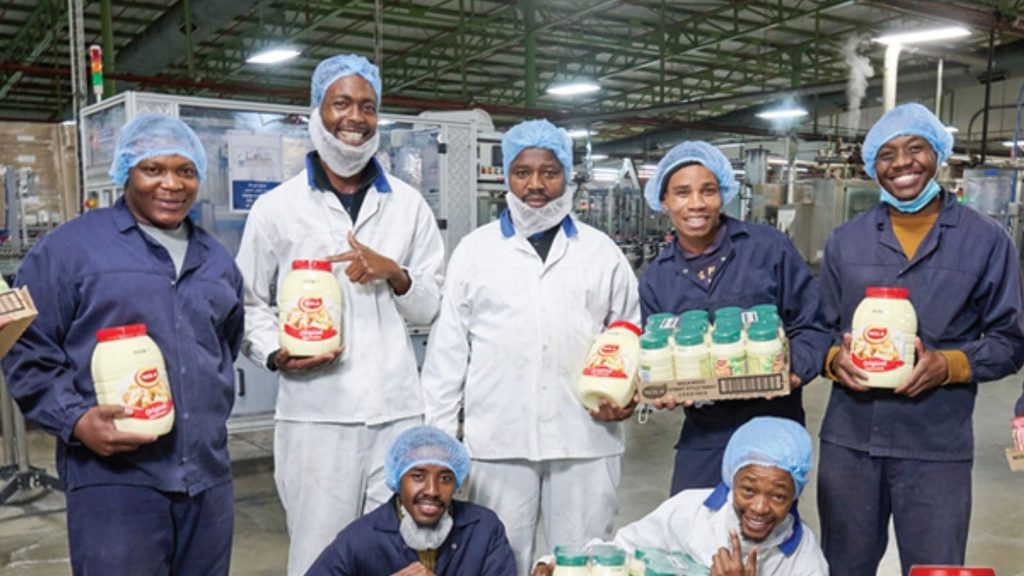
Nola has become one of RCL Foods’ biggest revenue drivers, with the company producing 227,000 jars of mayonnaise per day.
The brand is backed by billionaire businessman Johann Rupert’s investment vehicle, Remgro, which owns a 79.5% stake in RCL Foods.
RCL Foods owns well-known South African brands, including Sunbake, Selati, Pieman’s, YumYum, Bobtail, Ouma, Catmor, Monati, and Nola.
Founded in 1951, Nola has grown into one of South Africa’s most well-known brands and a market leader in the mayonnaise and condiments category.
RCL Foods acquired the Nola brand in May 2013, when it acquired Foodcorp, one of South Africa’s largest food producers.
Since then, Nola has grown to become one of RCL Foods’ strongest and most profitable brands.
The company recently released its results and fact sheet for the year ended June 2026, which revealed that Nola is one of its R1 billion+ revenue brands.
This means Nola finds itself among brands such as Sunbake, Supreme Flour, Selati, Pieman’s, and Molatek.
According to RCL Foods’ 2026 Fact Sheet, Nola Mayonnaise holds 41.5% volume share of the South African market.
RCL Foods said it produces 227,000 jars of mayonnaise per day, showing the immense scale of the Nola brand.
The company’s website states that 144,000 bottles of Nola 750g mayonnaise are sold every day.
In RCL Foods’ 2026 financial results, Nola was one of three brands in the Culinary segment that maintained its market share and category leadership during the year.
While the group’s Culinary segment saw its volumes decline by 2.9%, the dressings category, which is anchored by Nola, saw volumes grow.
RCL Foods said it continues to focus on growing the Culinary core as a central part of its branded growth strategy.
It explained that consistent marketing investment helped to strengthen and protect brand equity for key brands like Nola, building long-term pricing power.
RCL Foods
Nola is one of many brands in RCL Foods’ strong and diversified portfolio, which is where the company’s competitive advantage lies.
The company’s latest results, released on 31 August, disappointed some investors, as RCL reported a decline in revenue, EBITDA, and earnings.
RCL’s revenue dropped 4.1% to R24.5 billion, which is attributed to low prices and volumes in its Sugar division, alongside declines in its Milling and Pet Food units.
The food producer’s EBITDA fell by 15.2% to R2.17 billion, and by 8.6% on an underlying basis, which excludes raw material commodity fair value adjustments and once-offs.
RCL’s headline earnings per share (HEPS) plunged 32.8% to 105.1 cents, with underlying HEPS down 27.5% to 105.9 cents.
Its return on invested capital fell to 9%, down from 13% in 2025, due to this lower profitability combined with increased capital expenditure and inventory levels.
PrimeXBT’s VIP Account Manager, Kearabilwe Nonyana, told BusinessDayTV that the Sugar division has been the “decimator” of the business and any investor capital in RCL Foods.
“They’ve got great brands all around, but it all comes back to costs. When you can’t control costs, it becomes almost like a commodity play,” Nonyana said.
“Truly speaking, it is like buying a miner. You’re really just taking on some cost exposure that you can’t control. All you can do right now is hope and pray.”
“For me, that’s what RCL Foods’ results look like right now: A hope and a prayer.”
RCL’s Sugar division has historic roots inside the company, with its sugar mill operations in Malelane, Mpumalanga, dating back 61 years.
In 1965, RCL’s sugar mill operations began cultivating and processing sugar cane, and it is now one of South Africa’s largest sugar producers.
However, the local sugar industry has come under severe pressure in recent years, as domestic producers struggle to compete against an influx of low-cost foreign sugar imports.
The issues at Tongaat Hulett, one of South Africa’s largest sugar producers, have also dealt a blow to the local sugar industry, with 18,000 growers dependent on the company’s mills.





Comments