8 million South Africans live in homes worth R3 trillion that do not belong to them


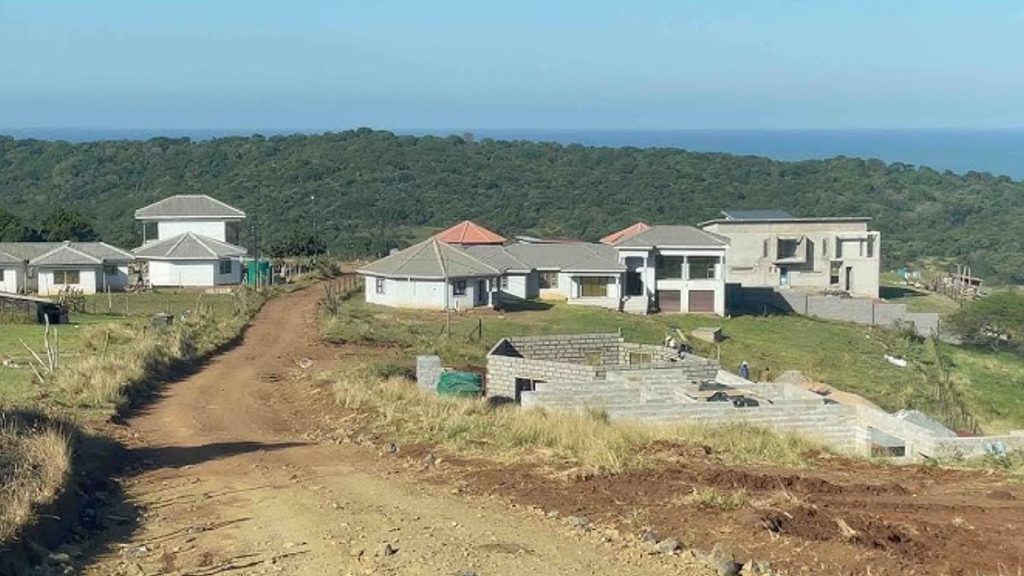
Eight million South Africans live on properties without title deeds, leaving R3 trillion in property value locked out of the economy.
This is due to administrative inefficiency and the high cost associated with securing a title deed, estimated at R3,500.
The cost extends far beyond the millions of people who do not own their homes, as the lack of title deeds prevents them from building wealth, accessing credit, and passing on property to the next generation.
Thus, these properties are referred to as “dead capital” because their value is locked out of the economy and cannot be used by their owners.
Informal economy expert GG Alcock told Standard Bank that despite the lack of a title deed, these homes are backed by strong property rights.
Alcock explained that township and rural communities in South Africa have de facto contractual and socially respected ownership rights that are enforced strongly.
This creates a strange situation where people live in a structure they own by all social definitions but do not have legal ownership.
Economist Hernando de Soto famously developed this as an economic theory where poor people have property, but not capital.
In South Africa, Alcock estimated that eight million people find themselves in this situation, where substantial wealth is tied up in a property that they do not legally own.
Because these eight million owners lack official title deeds, they cannot leverage them as collateral to secure long-term, low-interest bank loans.
They also cannot raise formal business capital or access many mainstream financial products, locking out R3 trillion in household wealth from the economy.
To put the scale of this wealth in context, it would equate to 38% of South Africa’s GDP.
“Some research has been done around the Giyani area, which shows huge amounts of property sales. But, there is no conveyancing, so there is no concept of market wealth,” Alcock explained.
“Imagine if we could liberate that R3 trillion and enable people to get low-interest loans. The economy would surge.”
Alcock explained that the lack of market value for these properties also means they cannot be insured, leaving owners financially wiped out in the event of a fire or flood.
Unlocking R3 trillion
Alcock explained that these properties, particularly in rural areas, are used as a form of informal savings by millions of South Africans.
The wages they earn from working in Johannesburg, Cape Town, or Durban are often funnelled back to rural areas where they build large mansions completely debt-free.
“If you go to Bushbuckridge or Giyani or Umtata, wherever it may be, incredible homes are being built. You just drive around and see these retirement homes,” Alcock said.
“You get told that black people don’t save, but they do in a different format. Often, they are funnelling savings into these homes for retirement.”
However, the economic potential of these savings and properties cannot be fully leveraged as the owners lack title deeds
“Imagine when we connect that property to the formal economy in a way that it can be leveraged to educate a child or a grandchild,” Alcock said.
“It is going to be phenomenal and create generational wealth. It is not about getting properties for first-time homeowners, but about creating wealth with people who already have these properties.”
There are two major initiatives to help South Africans access title deeds, with Alcock being intimately involved in one called eDeed.
This company has designed an alternative property valuation system that uses satellite imagery and valuations of physical building materials to determine a property’s value without a title deed.
Doing this can help owners get access to capital, albeit to a limited extent, and enable them to insure their properties.
A larger initiative is run by the Free Market Foundation (FMF) called the Khaya Lam Project, which funds the process of obtaining a title deed.
This project has issued 24,500 title deeds through donations from some of South Africa’s richest people, including businessmen Johann Rupert and Christo Wiese.
The project focuses on helping individuals who live on municipal property, often for extended periods, convert from tenants to homeowners.
Ultimately, the solution is to give people ownership of the land they live on, within reasonable limits, by streamlining and reducing the cost of the regulatory process.


Comments