The South African CEO who wanted to be a car mechanic taking over R1 trillion mining giant


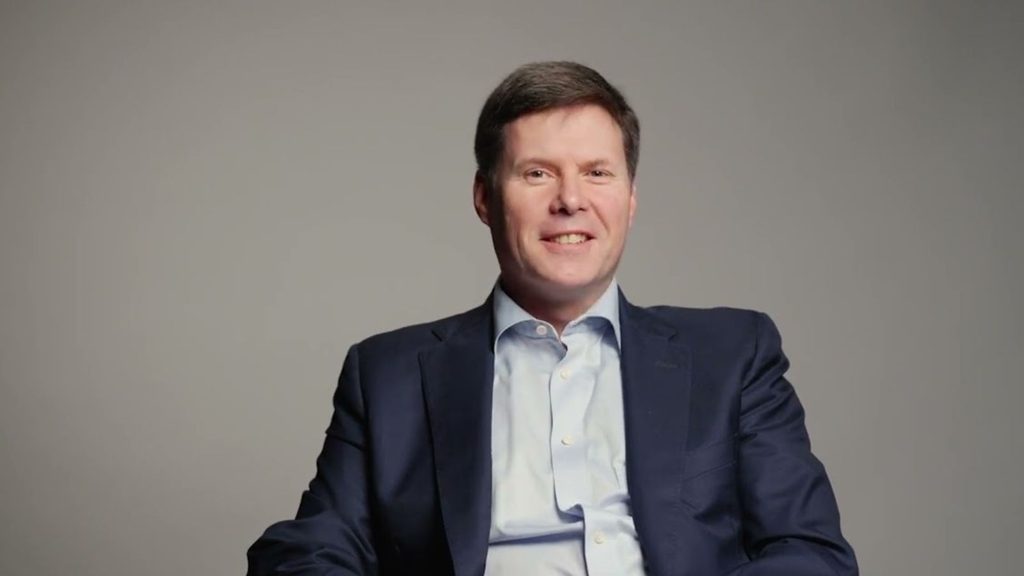
South African Duncan Wanblad is set to be the CEO of the combined Anglo American-Teck Resources mining giant.
Marshalling the giant valued at $50 billion to $63 billion (R801 billion to R1.03 trillion) will be a mammoth task even for the longtime Anglo executive.
One of the trickiest parts of a merger, particularly one of near equals, is deciding who gets to lead the combined entity and where it is based.
This has notoriously been a sticking point for many of Glencore’s attempted supermergers under Ivan Glasenberg and Gary Nagle.
Wanting executive control and culture clashes have left Glencore unable to acquire many of its desired targets over the past 15 years.
In the case of Anglo and Teck, such challenges have been kept noticeably quiet, with the companies seemingly achieving a compromise.
The merged entity will be headquartered in Canada, in Teck’s hometown of Vancouver. This will move Anglo further away from South Africa and its adopted home of London.
In a statement released on 25 August, the companies revealed that Wanblad will be CEO of the merged entity, putting the South African at the helm of the mining giant.
This will only come into effect following the completion of the merger, which is set for between September 2026 and March 2027.
The companies said the future executive leadership team brings together a highly experienced and complementary set of leaders from both companies.
Teck CEO Jonathan Price will become deputy CEO of the merged entity and its chief strategy officer, while Anglo chair Nolitha Fakude will retain her position in South Africa.
Kumba Iron Ore CEO Mpumi Zikalala will retain her position and, with other operational heads, report to COO Ruben Fernandes.
As the incoming CEO of Anglo Teck, I have utmost confidence in the highly capable executive and regional leadership teams that I have set out today,” Wanblad said.
“I look forward to working with the team over the coming years, from our headquarters in Canada, as we establish Anglo Teck and deliver the significant value from this formidable combination.”
Anglo estimates the merger will deliver annual pre-tax synergies of approximately $800 million by the fourth year following completion of the transaction.
It expects to realise 80% of this value annually by the end of the second year of operation as a combined company.
The man taking over
Born in Randfontein, Gauteng, mining formed the bedrock of Wanblad’s understanding of the economy. However, he never dreamed of working in the sector.
Wanblad recalled how he shocked his parents by saying he wanted to become a car mechanic and try to work in Formula 1.
This desire was steadily worked out of Wanblad, whose intelligence put him on course to study medicine and become a doctor.
However, Wanblad decided to follow in his father’s footsteps and pursue a career in mining by studying engineering at the University of Witwatersrand.
Wanblad graduated from Wits with a Bachelor of Science in Mechanical Engineering and a Graduate Diploma in Industrial Engineering.
This was in Wanblad’s blood. “My father was in mining. My uncle was in mining, and my grandfather had been in mining with my grandmother,” he said.
“Probably for that reason, I didn’t want to initially go into mining. I chose to do mechanical engineering to pursue my passion for motorsport.”
What changed Wanblad’s mind ultimately was a vacation job in mining. “I thought this was going to be the worst thing in the world for me,” he said.
“Coming out of those six weeks, I found that I really loved it. I just loved the people who were involved in it and what we were trying to do.”
Wanblad began his career at Johannesburg Consolidated Investment Company in 1990 before joining Anglo American, where he rapidly rose through the ranks.
The advantage of working at a giant like Anglo was the exposure it gave Wanblad to different minerals and parts of the business early in his career.
Wanblad initially worked at Anglo’s platinum business in the early 2000s, where he became interim CEO in 2007 before heading up its copper operations from London.
This gave him early insight into a metal of the future, with copper demand ramping up steadily as China’s economy boomed and investments in data centres took off.
Wanblad led the crucial Anglo investment in Quellaveco in Peru, giving the company one of the world’s best copper assets.
“The world is full of challenges, and you get into these things and say, ‘God, this is so hard.’ But, when you work with like-minded people who are committed, it turns out to be fun,” Wanblad said.
“We spend so much time at work. It should not be just boring and hard, you should enjoy it and have loads of fun.”
Wanblad has been an ‘Anglo for lifer’, with his success in the platinum business and in starting the copper operations, which made him CEO of its Base Metals division in 2013.
Simultaneously, he served as the head of Anglo’s strategy and business development team, which put him on the boards of De Beers and Kumba.
Since 2022, Wanblad has been Anglo’s CEO and has led its transformation into a “miner for the future” focused primarily on copper.
To reinvent Anglo and stave off BHP’s takeover bid, Wanblad has overseen the unbundling of Amplats into Valterra, the sale of its steelmaking coal business, and is close to selling De Beers.
“I love this company. I love the people and what this company does. I love the fact that I have the opportunity to steward it on the next chapter of its journey,” Wanblad said.




Comments