One man was headhunted by Koos Bekker and made Naspers R3 trillion – then lost his job


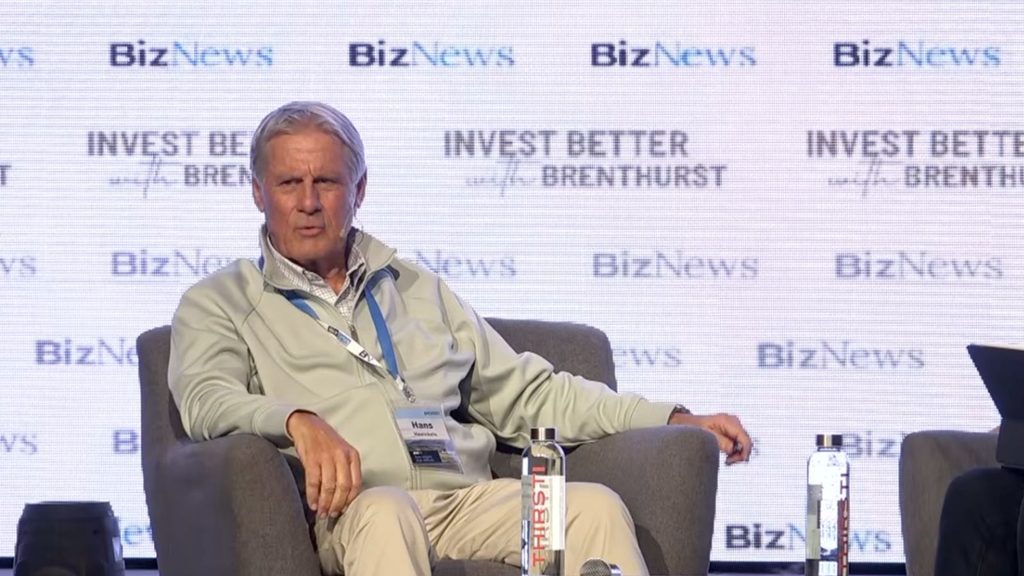
While Koos Bekker is a dollar billionaire and seen as the mastermind behind Naspers becoming South Africa’s most valuable company, it was Hans Hawinkels who secured the lucrative investment in Tencent.
The 2001 investment in Tencent gave Naspers the opportunity to own half of the company for $32 million (R250 million). This would turn into $200 billion (R3 trillion) at its peak.
Hawinkels told the story behind the investment at the 9th BizNews Conference, where he also revealed how he was pushed out of the company after the deal.
The Tencent investment is the bedrock of Naspers today, with the stake, which is held across Naspers and Prosus, hovering around $100 billion to $120 billion (R1.6 trillion to R1.9 trillion).
This is comfortably more valuable than the combined value of Naspers and Prosus, which includes investments in 80 companies worldwide.
Much of the praise and financial reward for the Tencent deal has gone to Bekker, whose net worth is estimated to be $3.4 billion (R54 billion) by Forbes.
Bekker has also gained prominence for his investments in luxury hotels and estates, such as Babylonstoren and The Newt in Somerset.
Highly secretive, Bekker has shared few details about his personal experience in turning Naspers from a media house into one of the world’s largest technology investors.
Hawinkels recalled his first interaction with Bekker, who was searching for someone to head up the distribution of M-Net across Africa in the 1990s.
“M-Net had just broken even with about 500,000 subscirbers and Koos wanted someone to come in and distribute the signal across Africa. I was at Naspers in some capacity at the time,” Hawinkels said.
“I then came up with MultiChoice to distribute M-Net, which then had all the content from movies to sports. We did deals across Africa and made a lot of money.”
Hawinkels said that Bekker spent a lot of time with Irdeto, a company within Naspers at the time, to develop digital encryption technology.
This enabled them to launch DStv in South Africa, with digital encryption facilitating the beaming of digital signals across the country, and people would buy decoders to receive the signal.
During this period, Hawinkels formed a strong relationship with Bekker, who had already begun looking further afield.
Bekker was interested in striking deals with international public broadcasters, and his first port of call was China, where he secured a deal with the state broadcaster CCTV.
After visiting China, Hawinkels and MultiChoice expanded heavily into Europe, using the cash generated in South Africa to buy interests in pay-TV operators.
“But then, Europe became a black hole. Long story short, we sold our European interests to Canal+, who now own MultiChoice,” Hawinkels said.
“Koos and the team came back to South Africa, and that is when he took over Naspers after getting a generous stake from Ton Vosloo.”
The Tencent miracle
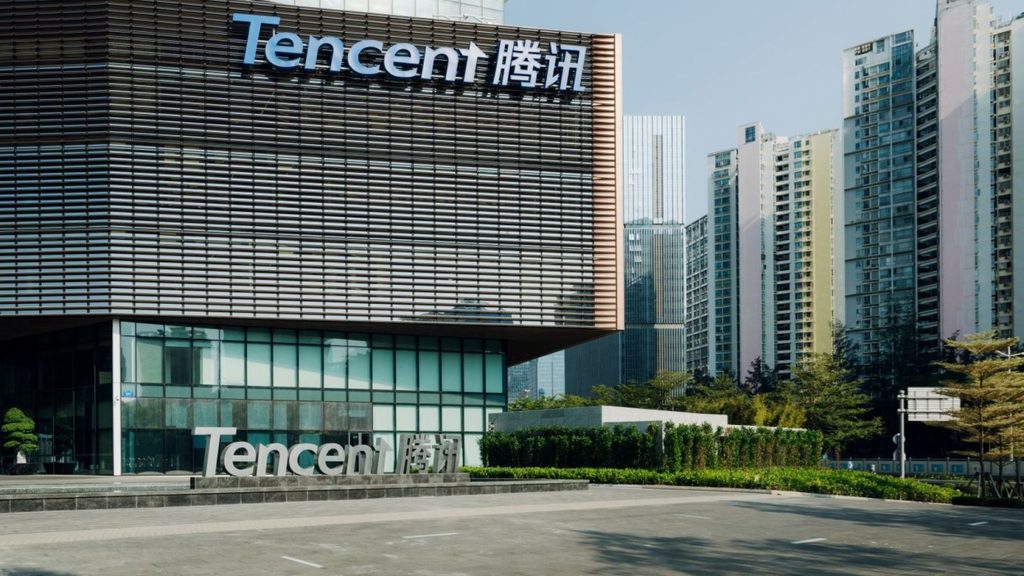
“Koos said to me, ‘Hans, you have done a lot of deals and worked in China. Why don’t you take your family and move to Hong Kong?’”
The idea was to establish a Naspers footprint in Asia, with a Hong Kong base. He moved his family to the city and began searching for deals in China’s emerging technology sector.
“I had less operational involvement and more of a venture capital mindset, where I would look to invest in companies across Asia, but principally in China,” Hawinkels said.
Hawinkels said it was incredibly difficult to do deals in China as the government was heavily involved in the economy. “When China enters the room, the profits leave the room,” he said.
His job was also made difficult by Bekker, who wanted outright control of any company in which Naspers invested, as he was worried about being bought out by a foreign media house.
“But that stopped me from making deals. There was no way I could get control from young entrepreneurs in these tech companies,” Hawinkels said.
“I met with Jack Ma, for example, and I could have bought a 7% share in Alibaba, but we turned it down because we could not get control. The same happened with NetEase.”
Soon, a perfect opportunity came across Hawinkels’ desk. American giant IDG Ventures called him to ask if he wanted its 25% stake in a small startup called Tencent.
“Only one of the founders spoke English. I had to now convince them through interpreters that Naspers would be a good partner and shareholder,” Hawinkels said.
“I had to convince another shareholder, PCCW, to sell us their 25% stake. If I did both, we could get 50% plus one share. In other words, control.”
At the time, Tencent was running a communication platform called QQ and was not making any money, as broadband and mobile phones were not widely adopted.
“I used to walk around all these internet cafes in China and see these guys using QQ to communicate. It was just magical, like WhatsApp today, but restricted to a laptop in an internet cafe,” he said.
Hawinkels began travelling to Shenzhen to speak to Tencent founder Pony Ma and struck up a good relationship. However, the other shareholder, PCCW, remained unconvinced by the deal.
“It took me three months of back-and-forth to secure that 25% share, and that was just a phone call. I had to take the deal at $32 million for their shares without any due diligence.”
“The opportunity came at a difficult time for Naspers, but Koos backed it. He told our finance chief to go to Absa and borrow the $32 million from Donnie Cronje.”
“What made me confident? I liked the management team. You back the jockey, and those jockeys were really, really impressive.”
Hawinkels’ exit
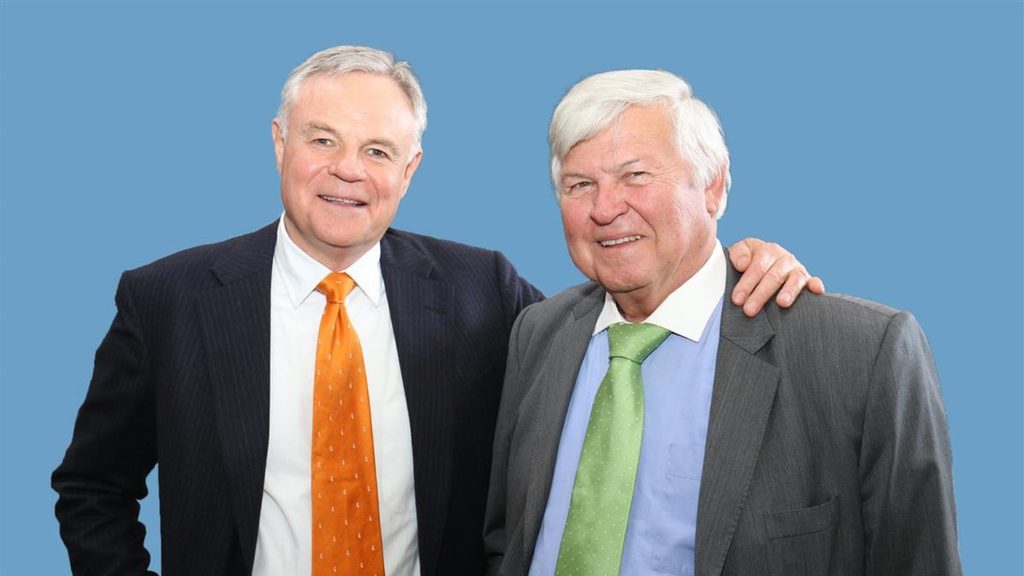
After making the deal in 2001, Hawinkels realised that he had to help Tencent monetise their platform, and broadband was key to that.
“We found our breakthrough because one of the co-founders had a relationship with China Mobile. Tencent had massive data traffic, and we wanted to shift the business to a mobile platform.”
The deal with China Mobile was revolutionary. Its subscribers would pay a $ 1-per-month fee to access QQ on their phones, with 15% retained as a billing fee. The rest went to Tencent.
This gave Tencent its first revenue stream, which formed the bedrock of the company that would become one of the largest technology players in the world.
Despite this success and Tencent’s surging valuation, Naspers decided not to renew Hawinkels’ contract.
“I don’t know. To this day, I really don’t know why it was not renewed. There is a scar from my contract not being renewed, but I didn’t allow that scar to fester and control my life. I put it behind me,” he said.
Hawinkels returned to South Africa to work as the CEO of Virgin Active under Richard Branson, then moved on to MTN and various family offices.
After decades of travelling, Hawinkels returned to South Africa, where he is now Truworths’ chairman and has a few small technology investments.
“Koos’s second-in-command did come back to me years later, and we had a long chat. I think they recognised that a mistake had been made,” Hawinkels said.
“Koos did invite me to a couple of corporate functions, which I attended, but those were flimsy discussions, nothing of real substance.”
Six years after the investment, Tencent launched WeChat and was listed on the Hong Kong stock exchange at a value of $760 million – more than 10 times the valuation Naspers invested at.
At its peak, the Tencent stake was worth $200 billion (R3 trillion) for Naspers. Now it hovers around $100 billion (R1.6 trillion) after it began selling shares to invest money elsewhere.



Comments