How much it costs to buy a home in South Africa


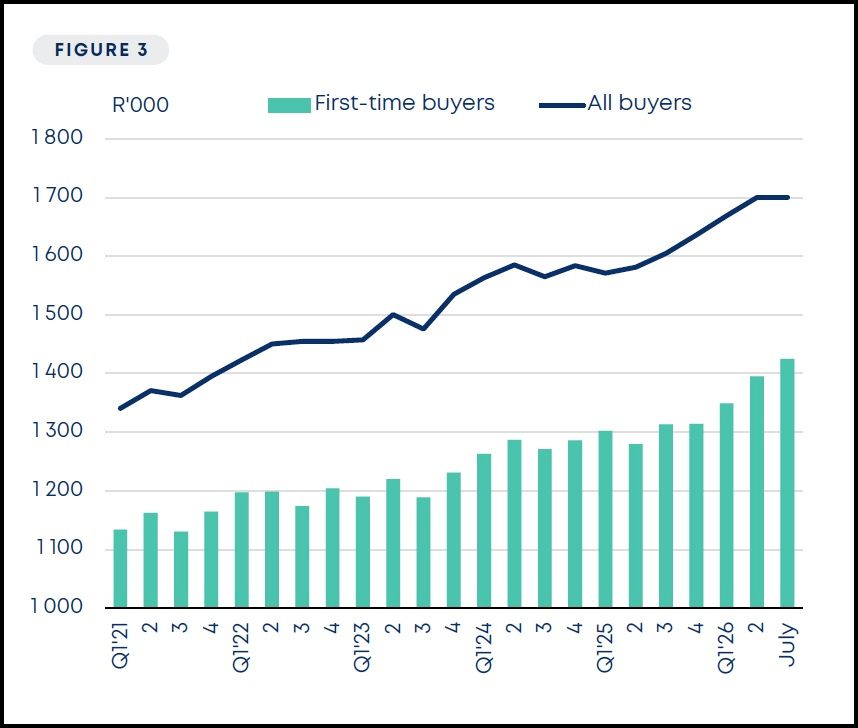
South African homebuyers paid an average of R1.7 million for a home in July 2026, while first-time buyers paid just over R1.4 million.
This was revealed in BetterBond’s latest property brief, which explained that South African homebuyers are benefiting from improved affordability and resilient demand.
“It’s encouraging to see the market holding up well despite ongoing economic uncertainty,” said BetterHome Group Mortgage Origination and BetterBond CEO Stephan Potgieter.
“More home loans are being approved, affordability has improved over the past two years, and buyer confidence remains resilient.”
According to Potgieter, this creates real opportunities for South Africans looking to take the next step on the property ladder.
In July 2026, the Monetary Policy Committee announced its decision to keep the benchmark lending rate at 7%, which meant that the prime lending rate remained at 10.5%.
The decision came as global oil prices remained volatile. Brent crude averaged around $75 per barrel during the first 10 days of July before rising to around $87 per barrel on 23 July.
The brief said central banks have adopted a wait-and-see approach, partly because higher global inflation is expected to be temporary.
BetterBond’s property brief also revealed that the country’s average house prices remained relatively stable in July 2026.
The average price paid by all homebuyers remained at R1.7 million, while the average price for first-time buyers increased slightly to more than R1.4 million. This was a new record for first-time buyers.
The increase in the prime lending rate from 10.25% to 10.5% in May 2026, together with higher average deposit requirements, limited further movement in house prices.
However, the overall affordability of property has improved since interest rates began falling towards the end of 2024.
BetterBond said higher affordability, combined with rising average incomes among homebuyers, has supported house price growth.
In real terms, the country’s average house prices increased by 1.1% year-on-year for all buyers and 3% for first-time buyers.
Deposits remain a challenge
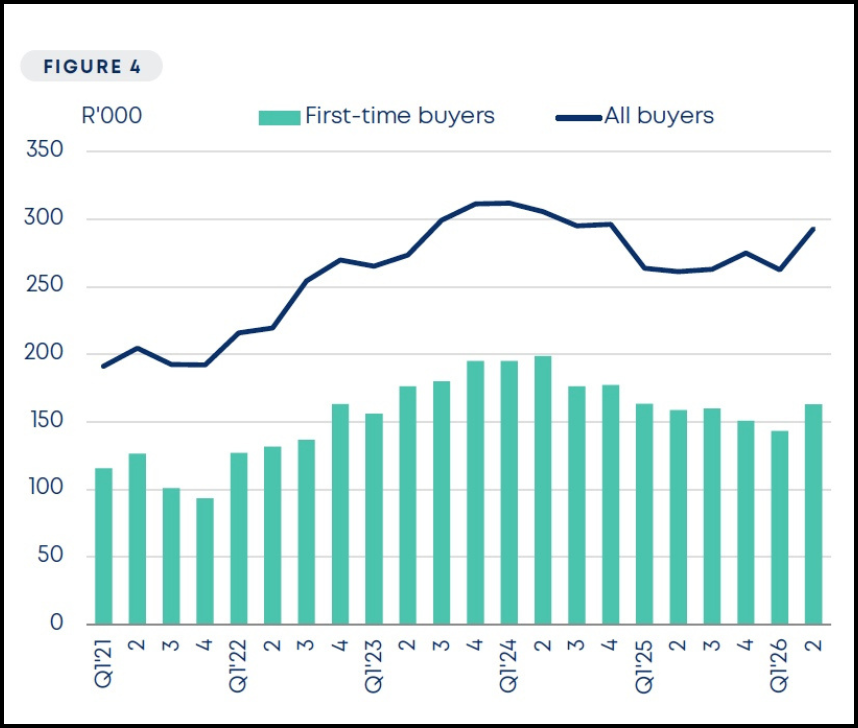
While affordability has improved, buyers are still facing higher deposit requirements. The average deposit required for a home increased in July after falling in June.
For all buyers, the average deposit was 9.5% higher than in July 2025, although it was only 3.3% higher than two years earlier.
First-time buyers required an average deposit equal to 13.2% of the average home price in July 2026. BetterBond said this remains below the levels recorded during the interest-rate-hiking cycle between 2022 and 2024.
The recent increase in house prices has also helped to keep deposits more manageable relative to property values.
Overall, BetterBond revealed that first-time buyers are also taking out larger home loans in several parts of the country.
In the 12 months to the end of July 2026, South Africa’s national average home loan value for first-time buyers was R1.2 million.
The Eastern Cape recorded the largest increase in average first-time buyer home loan values over the past two years, at 21%.
The Western Cape followed with a 20% increase, while Mpumalanga recorded an 18% increase. Only Johannesburg’s North Western suburbs and Greater Pretoria failed to record double-digit increases over the period.
BetterBond attributed the growth to lower deposit requirements, the decline in the prime lending rate from 11.75% in September 2024 to 10.5%, and rising incomes among first-time buyers.
These factors have improved the financial position of many prospective homeowners and helped support demand for property.