Dark clouds gather over one of South Africa’s most important companies


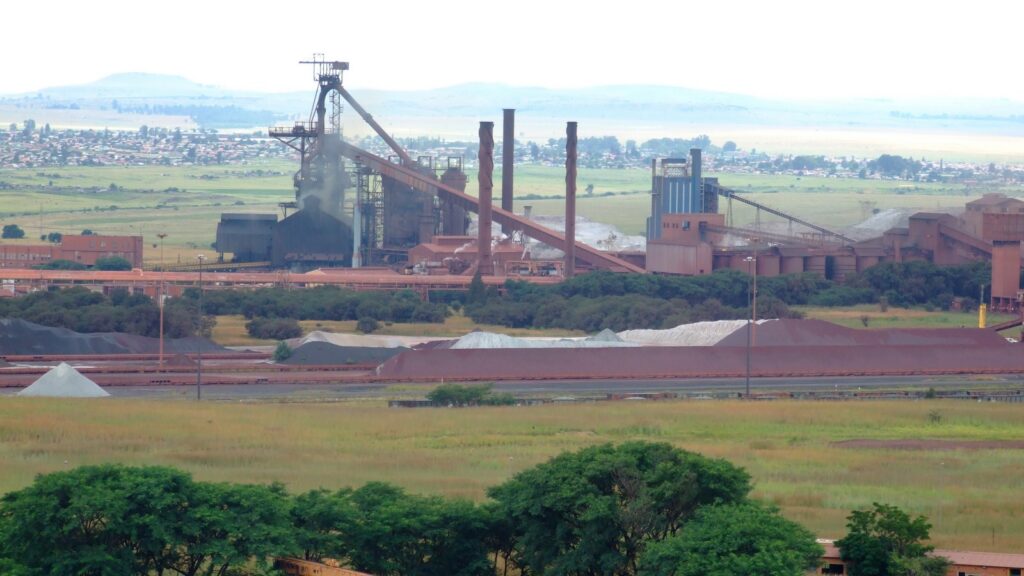
ArcelorMittal South Africa (AMSA), the largest steel producer in South Africa, hopes to regain profitability after years of losses. However, it is easier said than done.
In its latest interim results, AMSA reported a headline loss of R1.49 billion for the first six months of 2026. If this continues into the second half of the year, this will be the company’s fourth consecutive annual loss.
AMSA pointed to challenging market conditions, such as declining domestic demand, rising imports, and global steel overcapacity, as factors which contributed to its results.
“The South African steel market remained under pressure, although apparent steel consumption increased by 2% to approximately 1.3 million tonnes,” AMSA said.
“Imports continued to account for 47% of domestic demand, constraining local industry growth and placing significant pressure on producers.”
The declining performance of AMSA has coincided with continued pressure on South Africa’s steel industry, which has faced a gradual structural decline over the last two decades.
In 2006, Arcelor SA and Mittal Steel Group merged to form ArcelorMittal, the world’s largest steel producer, with AMSA as a key subsidiary. That same year, South African steel production peaked at around 9.7 million tonnes.
Just two years later, AMSA reported a 65% rise in headline earnings to R9.5 billion, on revenues of R40 billion. This would be its peak, as the global financial crisis in late 2008 would see steel consumption drop by over 20%.
The following year, AMSA posted its first annual headline loss since the unbundling of Iscor in 2001, at R440 million. Since that year, more than 25,000 jobs have been lost across South Africa’s steel sector.
AMSA would continue to report large losses almost every year for the next 15 years, only briefly returning to profitability during 2010, 2018, and the post-COVID years of 2021 and 2022.
These losses were driven by factors such as deteriorating infrastructure, operational failures and incidents, and an influx of Chinese subsidised steel imports beginning in 2015.
In 2025, South Africa’s steel production sat at around 4.5 million tonnes, less than half of where it was 20 years ago. That year, AMSA recorded its third consecutive annual loss of R3.35 billion.
Turning ArcelorMittal around

Despite posting large headline losses, AMSA said it was making progress in repositioning itself for a return to profitability amid market headwinds.
The company described 2026 as a transition year, with a focus on maintaining and caring for its long steel business, which was wound down last September.
Commenting on the company’s latest results, AMSA CEO Kobus Verster said the business was in a stronger position now than where it was eighteen months earlier.
“The difficult decisions we have taken are beginning to deliver measurable improvements in our underlying performance,” Verster said.
“Our priority remains completing the turnaround, restoring sustainable profitability and positioning ArcelorMittal South Africa for long-term success.”
While AMSA predicted market conditions would remain challenging during the second half of 2026, the company said numerous factors would work to improve industry prospects in 2027.
These range from an increased investment in infrastructure to continued operational improvements at the company, as well as expected policy support and fair-trade measures.
AMSA recently filed an application with the International Trade Administration Commission (ITAC) seeking an investigation into the impact of imported steel on local steel production.
The World Trade Organisation subsequently confirmed that ITAC had launched a safeguard investigation into this matter.
If ITAC’s investigation finds that rising steel imports have harmed local producers, ITAC will be granted the power to temporarily restrict steel imports into the country.
“Government efforts to strengthen trade protection measures and support localisation gained momentum during the period,” AMSA reported.
“AMSA continues to engage actively with policymakers and industry stakeholders to improve the competitiveness and sustainability of the domestic steel industry.”
In the meantime, the company said it would continue to focus on its cost competitiveness, improve productivity, and optimise its energy and logistics, amongst other objectives.
It also said safety would remain AMSA’s top priority as the company moves closer towards its Zero Harm ambitions of eliminating workplace injuries and fatalities.





Comments