The ‘world-class’ city where South Africans don’t have electricity for five hours a day


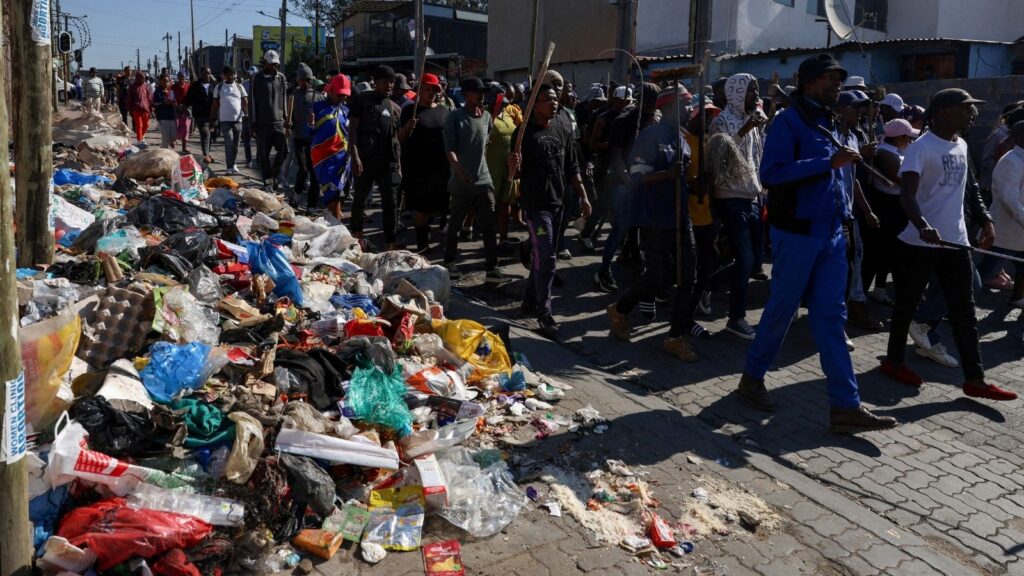
The City of Johannesburg is failing to address its electricity infrastructure and debt to Eskom, which is leaving citizens in many parts of the municipality without power for five hours a day.
This is the view of Business Leadership South Africa (BLSA) CEO Busi Mavuso, who spoke about Johannesburg’s failings in the latest instalment of the PSG Think Big series.
Mavuso explained that, from a business perspective, the collapse of many South African municipalities is a grave concern.
She said the failure of major municipalities, particularly the City of Johannesburg, places an enormous burden on businesses and companies to manage around state failure.
“The cost of doing business has become one of the biggest constraints on economic activity,” she said.
“You are seeing businesses having to invest in backup power, in water storage, in road repairs, in private security, in logistics, in alternatives in infrastructure maintenance simply to remain operational.”
Given Johannesburg’s central role in South Africa’s economy, accounting for 16% of the country’s GDP, the city’s failures are of national concern.
Johannesburg is home to 4.8 million residents, serves as the headquarters of many of South Africa’s biggest companies, and houses the largest stock exchange in Africa, the JSE.
The ‘City of Gold’, a nickname dating back to Johannesburg’s gold rush in the 1880s, is considered South Africa’s richest. It is home to 11,700 millionaires according to Henley & Partners.
Johannesburg also boasts Sandton, often described as the richest square mile in Africa due to its high concentration of wealthy residents, corporate headquarters, and luxury real estate.
Johannesburg is often described as “world-class”, having officially adopted the vision of becoming a “world-class African city” in 2000 when its metropolitan structure was formed.
However, in recent years, Johannesburg has failed to live up to its reputation, and many of its residents’ standard of living has been anything but world-class.
Fixing Johannesburg

One of the starkest examples of Johannesburg’s decline can be seen in its electricity failures, which have seen the city’s residents be without power for hours on end.
Mavuso pointed out that the city’s electricity losses sit at R2.5 billion. The city also owes Eskom a staggering R3.8 billion.
Notably, this is Johannesburg’s total debt even after having made payments of R4.3 billion to Eskom in July 2026.
Mavuso explained that Johannesburg’s financial woes mean that it cannot afford to upgrade or maintain its electricity infrastructure, leaving many of its residents in the dark.
“It is quite unfortunate that we are celebrating a year without load-shedding as a country and yet so many of our citizens don’t even know what we’re talking about,” she said.
“Because while we’re talking about no load-shedding, they sit with load reduction for five hours every day.”
She said residents of Alexandra, Thembisa, and Soweto are particularly affected because the City of Johannesburg fails to ensure that its electricity distribution infrastructure is fit for purpose.
“Once you start fixing the electricity infrastructure, you also improve the quality of lives,” Mavuso said.
However, the city cannot afford to do so, and Mavuso said the only solution is to fix Johannesburg itself.
“Fix the R2.5 billion by fixing the City of Joburg,” Mavuso said. “Those electricity losses can be converted into fixing the infrastructure to make sure that we deal with load reduction.”
In June 2026, BLSA, Business Unity South Africa, and the B4SA Steering Committee issued a public statement affirming the private sector’s commitment to reforming Johannesburg.
Mavuso said the most important factor needed for Johannesburg’s reform is a responsible counterparty to business that is committed to turning the city around.
“We need a counterparty in the City of Joburg that is serious about turning the city around. Otherwise, it’s really going to be an absolute waste of our time,” she said.
Ahead of South Africa’s municipal elections in November, Mavuso said the private sector is committed to working with the political parties that can accelerate Johannesburg’s restoration.
“These things can actually be accelerated quite quickly because the challenges that we’re facing from a job and a broader municipal perspective are not unfixable,” she said.
“Whichever political party comes in, we would like to work with them, but they actually have to demonstrate seriousness and political will to change things around.”



Comments