Trouble at top sporting union will cost Springbok fans thousands more for tickets


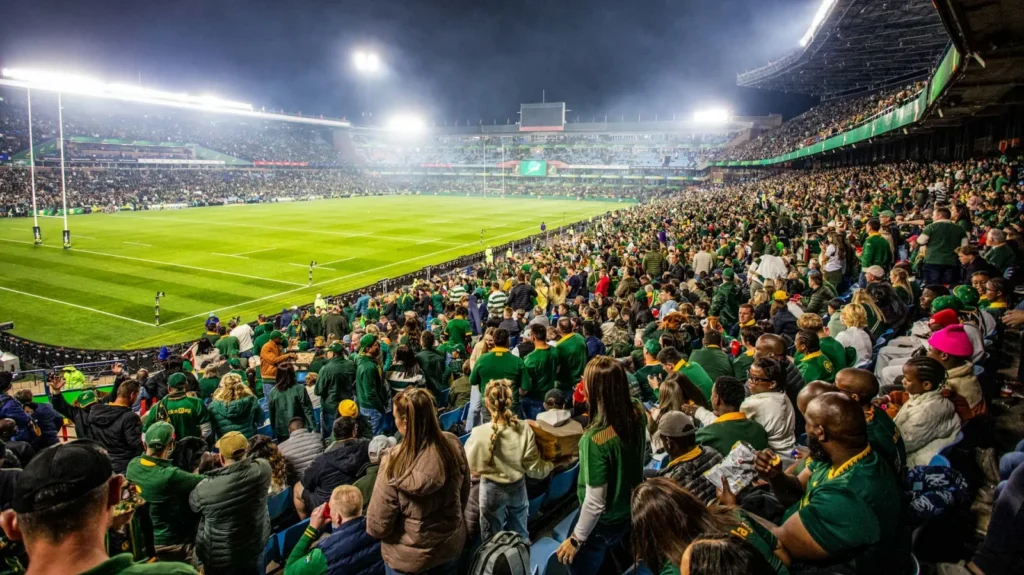
Despite the continued global dominance of South Africa’s national rugby team, the South African Rugby Union’s (SARU) financial position remains a concern.
Continued balance sheet pressure could see the costs trickle down to South African rugby fans in the form of higher ticket and merchandise prices.
In its 2025 annual report, SARU reported that both the group and the union were technically insolvent, a position it had carried over from its 2024 financial year.
By the end of 2025, the value of SARU’s liabilities had exceeded the value of its assets by R84 million at a group level and R113 million at a union level.
Additionally, the union reported a net loss of R32.3 million in 2025, following a historic R95 million deficit in the prior year.
This was the largest loss recorded by SARU since the rugby union professionalised in 1996, and was mainly attributed to the absence of a private equity agreement.
At the end of 2025, SARU’s net cash position was reported to be overdrawn by R19.5 million, supported by a secured overdraft facility of R100 million.
Reasons for SARU’s losses in 2025 included R400 million in funding commitments to member unions, as well as R195 million to secure player image rights and insurance.
Despite sustaining losses for two years in a row, however, SARU said it remained confident that a return to profitability was within reach.
SARU’s group revenue reached R2 billion in 2025, a 29% increase from the year before, allowing it to continue operating as a going concern.
“SA Rugby has demonstrated resilience in a challenging operating environment and has taken deliberate steps to future-proof its financial sustainability,” SARU said.
“This has been supported by investment in new competitions and technology, together with a reset of its commercial programme to strengthen long-term revenue generation and profitability.”
SARU cannot absorb costs forever
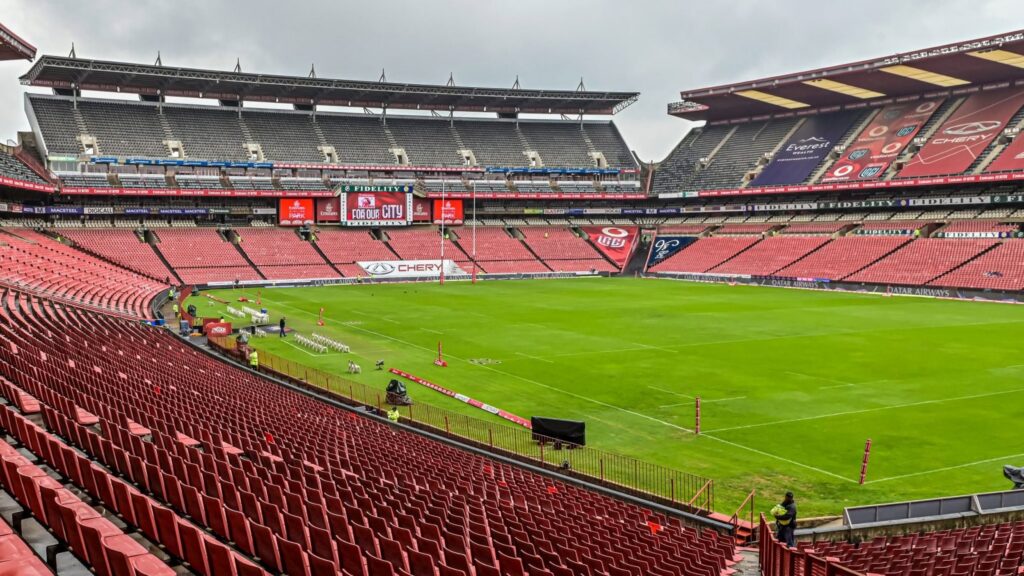
Despite SARU’s confidence that it can return to a positive cash flow position, failure to do so would likely lead to even higher ticket prices for Springbok fans.
In an interview with BizNews, chartered accountant and former Sun International CEO David Coutts-Trotter explained how SARU’s ticket pricing strategy likely worked.
“As far as I can see it, they have looked at global ticket prices and said ‘we’ve got to set our ticket prices there’,” Coutts-Trotter said.
“The difference is people don’t earn global incomes in South Africa. What is an affordable ticket for a family of four in London is not the same as in South Africa.”
According to Coutts-Trotter, England’s rugby governing body, the Rugby Football Union (RFU), earns 2.7 times as much revenue as SARU.
Yet while ticket sales accounted for 20% of SARU’s revenue in 2025, it also represented 10% of its costs, meaning it was less profitable than broadcasting and sponsorships.
Coutts-Trotter speculated that this may have led SARU to increase ticket prices as a means to make it a more profitable revenue stream.
This has backfired, however, with SARU recently having to significantly drop ticket prices for the Springboks’ Nations Championship opener against England at Ellis Park.
Slow ticket sales due to backlash over the high initial prices saw SARU reduce the cost of the cheapest tickets from R950 down to R450.
SARU president Mark Alexander noted the pushback and said the union would conduct a full review of its ticket pricing strategy at the end of the 2026 rugby season.
“We take full ownership of the matter and are committed to ensuring that our ticketing structure reflects accessibility and sustainability,” Alexander said.
“We must balance this commitment with the responsibility of making these events financially viable. It is a delicate balance, but one we are determined to manage responsibly.”
Alexander claimed that SARU’s commercial mandate was not to secure higher profits for itself, but simply to cover the costs of running rugby in South Africa.
Coutts-Trotter refuted this, however, pointing out that those who had bought tickets before the prices were dropped were denied refunds and did not receive any of their money back.




Comments