The shadow state robbing South Africa of R84.6 billion every year


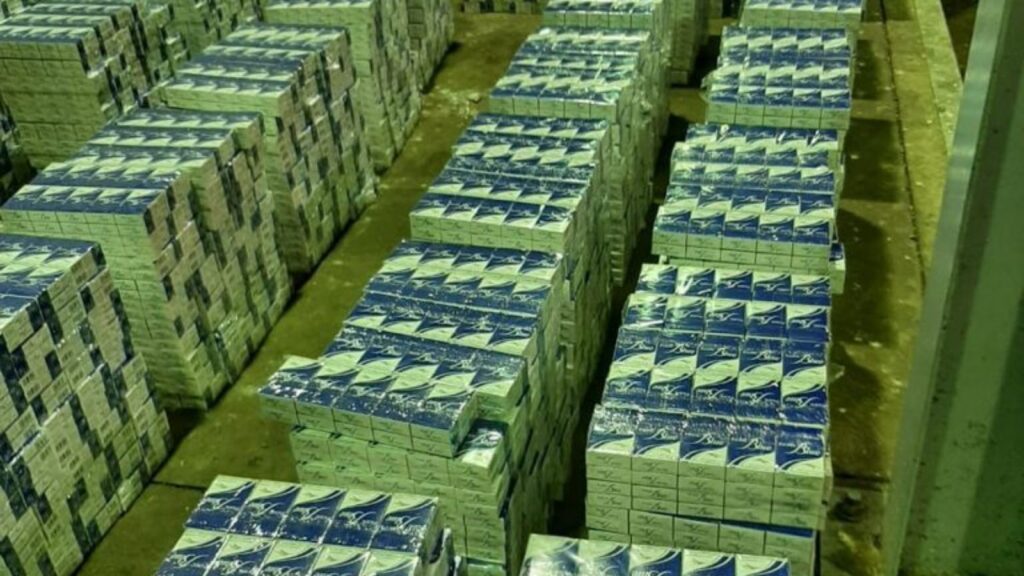
The illicit economy costs the South African government at least R84.6 billion in lost tax revenue each year.
This conservative figure represents a significant financial drain on the state, equivalent to the entire budget of the City of Johannesburg.
Frans Cronje Private Clients revealed the damage caused by the illicit economy in its latest report titled Shadow State Rising.
This economy no longer operates as a collection of criminal syndicates, but rather a highly organised parallel to its formal counterpart.
The research firm terms this the “shadow state”, which operates its own supply chains, distribution networks, and enforcement arms.
In South Africa, this economy is dominated by the illicit cigarette trade, which is one of the largest markets in the world for tobacco.
Frans Cronje Private Clients estimates that up to 75% of all cigarettes sold in South Africa are now illicit. This means they are untaxed, smuggled, or undeclared.
This sector has grown so strongly in recent years that British American Tobacco is shutting down its Heidelberg manufacturing plant at the end of 2026, as it can no longer compete.
In a similar fashion, South Africa’s illicit alcohol trade has ballooned in size since the era of Covid-19 lockdowns.
These lockdowns made the illicit economy the only place to access cigarettes and alcohol, among other things, banned by the state.
More recently, these two sectors have been coupled with a surge in illegal mining from so-called Zama Zamas.
These miners conduct unregulated, illegal mining for gold, diamonds, and chrome, selling the goods on the black market and often for export.
The illicit economy has shifted away from survivalist trade into highly weaponised operations that mimic corporate structures in the formal economy.
This makes it increasingly difficult for SARS to clamp down on, as it is met with entrenched mafias that have extensive methods to hide their finances from the state.
The financial impact on South Africa
When goods are purchased in the informal economy, the government does not collect tax on the sale or production, nor is the safety of the product regulated.
This makes the sale of these products unsafe for consumers and also a significant drain on the country’s finances.
Frans Cronje Private Clients estimates the cost to be at least R84.6 billion in the form of uncollected tax revenue.
This forms part of what SARS calls the tax gap, which is the difference between the amount of tax assessed by it and what is paid to it.
It estimates this gap to be R800 billion, with the largest portion of it made up by uncollected VAT in the illicit and informal economies.
Frans Cronje Private Clients explained that the shadow state’s drain on South Africa has a meaningful impact on the local economy.
The amount of money it ‘robs’ from individuals, businesses and the state is equivalent to 1% of South Africa’s entire economic output in a year.
Furthermore, it is equivalent to 4% of the government’s total tax revenue of R2.1 trillion and 23% of its annual budget deficit.
This means that if the illicit economy paid tax as the formal economy does, it would cut South Africa’s annual borrowing requirement by a quarter.
The research firm explained that the losses are highly concentrated in particular economic sectors that have long been reliable sources of revenue for the state.
The sin taxes collected on tobacco and alcohol are relatively easy for the state to administer, while mining taxes are also difficult for large corporations to avoid.
Illicit cigarettes drive by far the most lost tax revenue. The firm estimated that the state loses R33.3 billion in revenue annually from this sector alone.
Zama Zamas are a distant second, costing South Africa R23.5 billion annually. Illicit alcohol results in lost tax revenue of R17.5 billion annually.
Smaller illicit sectors, such as fuel smuggling and illegal fishing, cost the state R5.6 billion in lost revenue annually.





Comments