Standard Bank cutting the US dollar out of trade with China


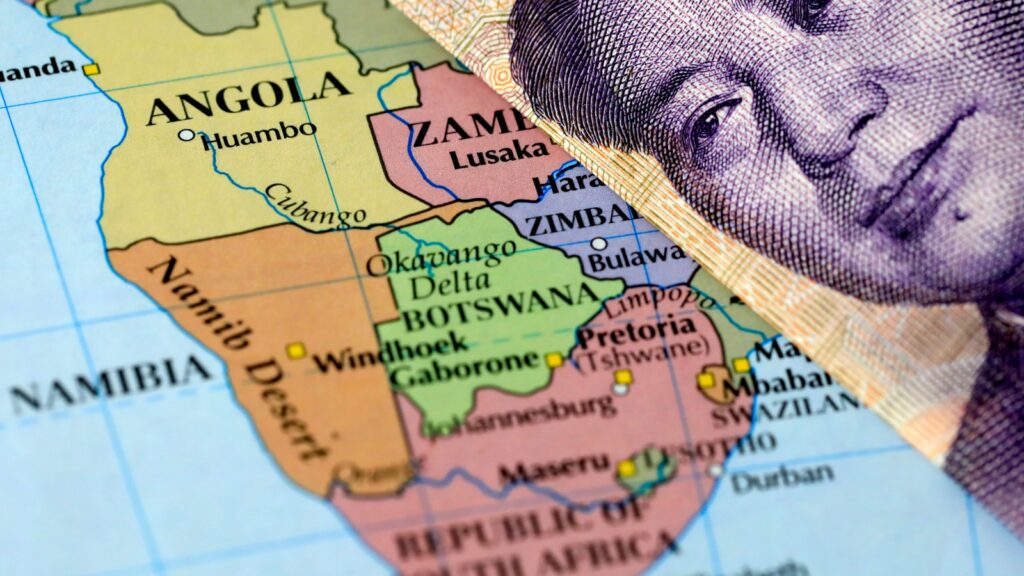
Standard Bank is enabling businesses that bank with it to settle trade with Chinese counterparts in renminbi across 19 countries in Africa.
The bank is the first on the continent to be authorised to do so by the People’s Bank of China through its partnership with the Industrial and Commercial Bank of China (ICBC).
Standard Bank’s partnership with the ICBC goes back 18 years and runs deep, with the Chinese giant having a 20.1% stake in the Big Blue.
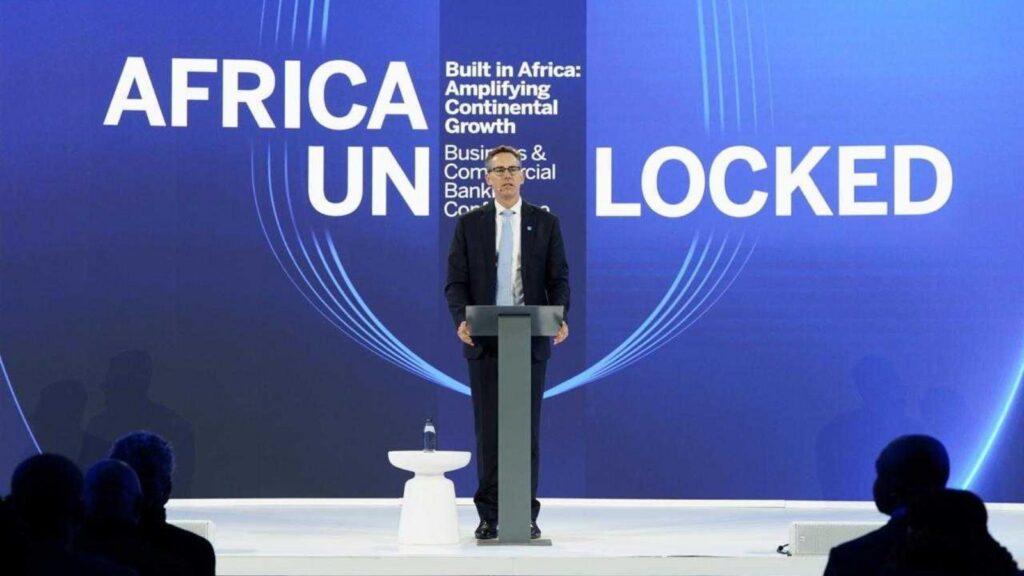
Speaking at the bank’s annual Africa Unlocked conference in Cape Town this week, Business and Commercial Banking CEO Bill Blackie outlined what this could do for businesses in Africa.
“This changes what is possible for our clients and the economies we serve. International trade remains one of the most powerful engines for economic prosperity,” Blackie explained.
“African businesses are renegotiating the terms of their debt with China, India, the Gulf, and Europe. They are moving from raw material exporters to value-added partners.”
The shift and the growth of Africa as a consumer market have made it more attractive to foreign investors and businesses.
Increasingly, African businesses are fulfilling key roles within global supply chains and demanding local processing of raw materials.
The heightened geopolitical competition between China and the US has also made Africa a battleground for the two economic powers to wield influence.
Standard Bank’s partnership with the ICBC gives it the ability to give its clients access to the Chinese economy and vice versa.
“Our partnership gives clients something more than a valuable corridor between Africa and China. It gives them a practical answer,” Blackie said.
“Today, they can open renminbi accounts and trade more simply with China. They can close transactions directly with Chinese suppliers, reducing friction.”
Blackie explained that this also enables African businesses to import Chinese machinery and equipment, making their companies more productive.
Over the past three years, 720 clients have imported machinery and equipment from China, dealing directly with suppliers.
On the other side of the equation, 380 clients now export directly to the Chinese market.
How it works
Standard Bank’s ability to clear renminbi transactions on the continent stems from its access to China’s Cross-Border Interbank Payment System (CIPS).
CIPS enables interbank payments between Africa and China using Chinese renminbi as the underlying currency.
It operates in the same way as the global SWIFT system, just replacing the dollar with the Chinese currency.
Standard Bank and ICBC will operate jointly as the Renminbi Clearing Bank of Africa with the capacity to clear transactions in 19 African countries.
Leveraging ICBC’s capabilities and Standard Bank’s African network, the clearing bank will serve as a core hub for business across Africa, significantly enhancing the efficiency of renminbi fund flows for various market participants.
The clearing bank status provides Standard Bank with exclusive access to China’s onshore financial system, including capital markets, liquidity, and payment services.
Standard Bank’s willingness to clear renminbi transactions is driven by significant changes in trade and financial flows across Africa over the past two decades.
The bank’s research shows that cross-border trade preferences among businesses in the top ten African markets have shifted notably.
Asian countries are now the preferred partners for an average of 35% of respondents, up from 24% in 2024.
China continues to dominate as the leading source of inputs, cited by 67% of surveyed businesses, with competitive pricing, product variety, and supply chain reliability highlighted as the key drivers of this preference.
“This new service will provide our clients with transparent, efficient and cost-effective payment solutions between China and Africa,” Standard Bank’s Richard de Roos said.
“China is Africa’s largest export market, and with a clearer status added to CIPS participation, Standard Bank is even better placed to support Africa’s trade with China. We expect demand for these services to continue to expand.”
 Loading ...





Comments