The ANC decision that broke South Africa’s economy


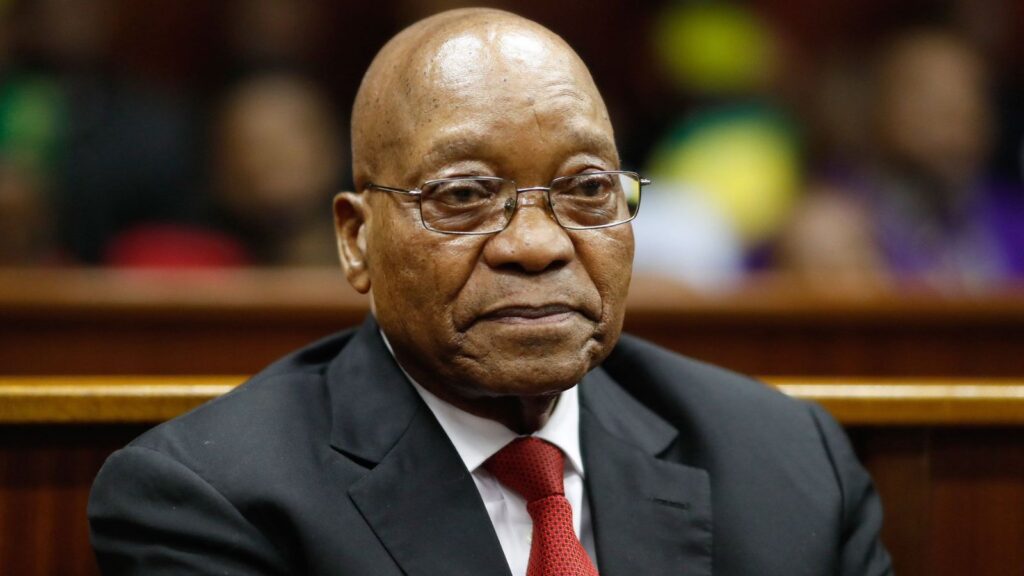
The election of Jacob Zuma as the president of the ANC in December 2007 was the turning point for South Africa’s economy.
A decade and a half later, the country is finally crawling above the 1% economic growth rate after state institutions were broken and hollowed out.
It will take far longer for investor confidence to be rebuilt and significant reform to ensure that such an episode cannot be replayed in South Africa.
Econometrix chief economist Dr Azar Jammine recalled working through the period of Zuma’s rise to power and how it destroyed South Africa’s economy in a Palatable Politics podcast.
Prior to Zuma’s ascension to ANC presidency and then the presidency of South Africa, the local economy was booming.
South Africa enjoyed consecutive years of economic growth above 4% and posted its first budget surplus since the end of apartheid.
Employment rose strongly, with the local economy creating 500,000 jobs annually for much of the 2000s. Things were going well, and South Africa was seen as a clear emerging market similar to China, India, and Indonesia.
“On 16 December 2007, the whole regime changed. The ANC hosted its elective conference in Polokwane and elected Jacob Zuma as its president,” Jammine recalled.
“That, for me, was the turning point in South Africa’s economic history from a medium- to longer-term point of view.”
It was not long after he was elected ANC president that Zuma was propelled into the national presidency to replace Thabo Mbeki.
Mbeki had overseen the liberalisation of South Africa’s economy, with the private sector playing a larger role and driving growth.
Crucially, Mbeki had also run a tight fiscal ship, with government spending being carefully limited to balance the budget and build investor confidence.
Investors responded. Billions flowed into South African financial assets and the economy. Credit ratings agencies upgraded the country to investment-grade territory, and the FIFA World Cup was around the corner.
The jubilation of the World Cup would end up being the peak of South Africa’s economic rebirth, with the local economy treading water for the next 15 years.
South Africa’s economic collapse

Jammine said the period from 2009 to 2018 under the Zuma presidency was characterised by the hollowing out of state institutions.
This was wide-ranging across government departments, state-owned enterprises (SOEs), and even foreign diplomatic missions. Apart from this, Zuma was simply out of his depth running the country.
“Mbeki was amazing as a president, but he was replaced by somebody who had a standard four education and represented South Africa poorly on the world stage,” Jammine said.
“His aim seemed to be to benefit the people around him and himself at the expense of ordinary South Africans. This came to be known as state capture.”
“Through this, he organised, very effectively, the emaciation of many of South Africa’s institutions and especially SOEs.”
The result of this was that a lot of the money embedded in these institutions was diverted into the pockets of a relatively small number of individuals.
This is now being felt in the collapse of infrastructure and service delivery across South Africa as SOEs and departments do not have the money to perform basic functions.
“After this period, there was not enough money left in SOEs to invest in the infrastructure needed to keep this economy growing,” Jammine said.
The clearest examples of this can be seen in the load-shedding that crushed the country’s economy over the last decade, increasing water shortages, and the collapse of the state logistics network.
“The way this state capture process was so successful was through procurement processes. The unfortunate thing is that this is now entrenched,” Jammine said.
“The mindset of many South Africans is that the only way to get rich is to get yourself in a connected position that can take money out of the state.”
South Africa’s economic growth rate plunged as a result of this period to hover around 1% annually from 2010 to 2025.
The country’s debt-to-GDP ratio tripled from 26% in 2009 to over 77% at the end of the 2025 financial year, putting South Africa on the edge of a debt spiral.
Rating agencies downgraded South Africa’s credit rating deep into junk status, cutting the country off from international investment.
Jammine said the impact of the Zuma presidency is slowly being undone, with key state institutions regaining their capacity and reform to increase the private sector’s role progressing.


Comments