The man who went from street racing to supplying South Africa’s R100 billion industry



Siphiwe Dlamini went from street racing cars in Europe to founding Auto Konek, a business which supplies parts to South Africa’s taxi industry.
Today, Dlamini is working hard to break into one of South Africa’s toughest industries. But his passion for both cars and repairs goes back to his early childhood.
Speaking on the Kaya Biz podcast, Dlamini explained that, growing up, he always enjoyed taking things apart and figuring out how they worked.
“I had a knack for working on stuff and fixing cars,” he said. “From the age of nine or 10, I was working on computers. I used to charge people to fix theirs.”
Through this hobby, Dlamini discovered that he had a real knack for entrepreneurship, and he could turn his passion into a business.
“I used to sell pirate CDs at school. I used to do compilations and sell them for like R20. That’s where the business aspect started coming in. I’ve always been interested in business, so I’ve always had a hustle,” he recalled.
In his early 20s, when Dlamini finally got his first car, he was able to combine his talent for fixing things towards vehicle modifications.
“You get your first car, you start modifying, then you learn how to optimise your car and optimise performance,” he explained.
He enjoyed working with cars so much that he even took up street racing. That hobby evolved into something more serious.
“After modifying and racing, I started doing a lot of track driving. I’ve been on tracks mainly in Europe because of the passion,” he said.
Later on, Dlamini combined his natural entrepreneurial sense and his passion for cars into his own business, Auto Konek.
Breaking into a R100 billion industry
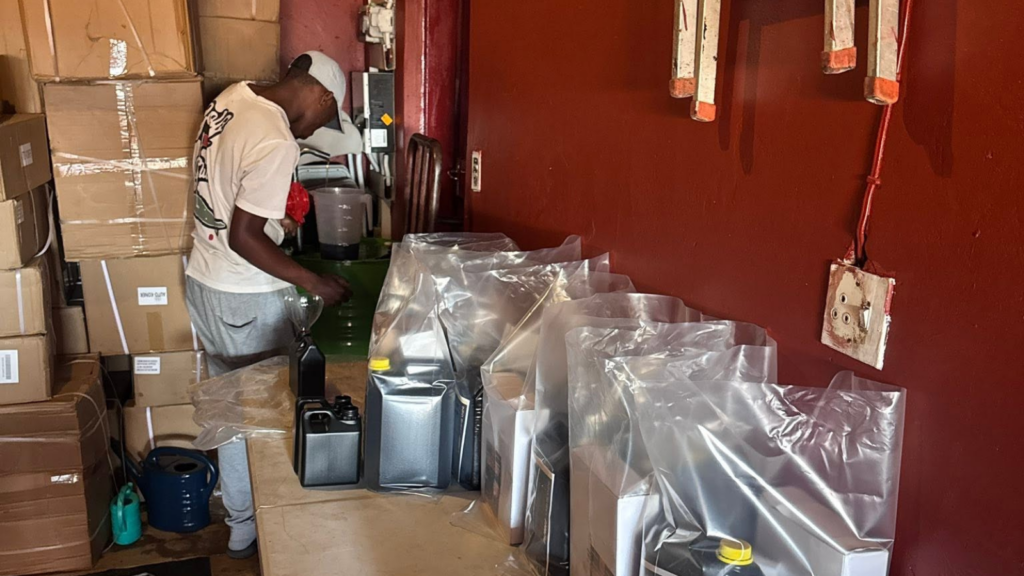
Auto Konek specialises in supplying service kits and brake components, primarily for Toyota Quantum taxis, the workhorse of South Africa’s substantial taxi industry, which is currently valued at around R100 billion.
Having been fully operational for the last year and a half, the company focuses on the products taxi operators need most frequently.
“What we are providing now is service kits and brake pads, front and rear, specifically for Toyota Quantums because that’s the workhorse,” Dlamini said.
While Auto Konek works with mechanics who resell its products, he said this group is actually not the company’s biggest market.
“The majority of my client base is taxi owners who buy from us directly. They’ll give me a call, place an order, and then they know in the next two to three hours we deliver,” he said.
“My busiest days are normally Thursdays, Fridays, and Saturday mornings because the guys want to service.”
The taxi industry is incredibly demanding, not only on the drivers but also on the vehicles themselves. Unlike ordinary passenger vehicles, taxis cover enormous distances every month.
“Taxi service is, on average, every four to six weeks because they put on more than 15,000 to 20,000 kilometres within a month and a half,” Dlamini explained.
“They go through brake pads probably once every two weeks. So, the upkeep of the taxi is very costly.”
Dlamini explained that his business fills an important gap by offering competitive prices while offering high-quality parts.
“We come in from a price perspective because we cut out the middleman,” he said. Rather than importing finished products, Auto Konek manufactures many of its components in-house, which helps keep costs low.
According to Dlamini, the country’s taxi owners are often unfairly portrayed as neglecting vehicle maintenance.
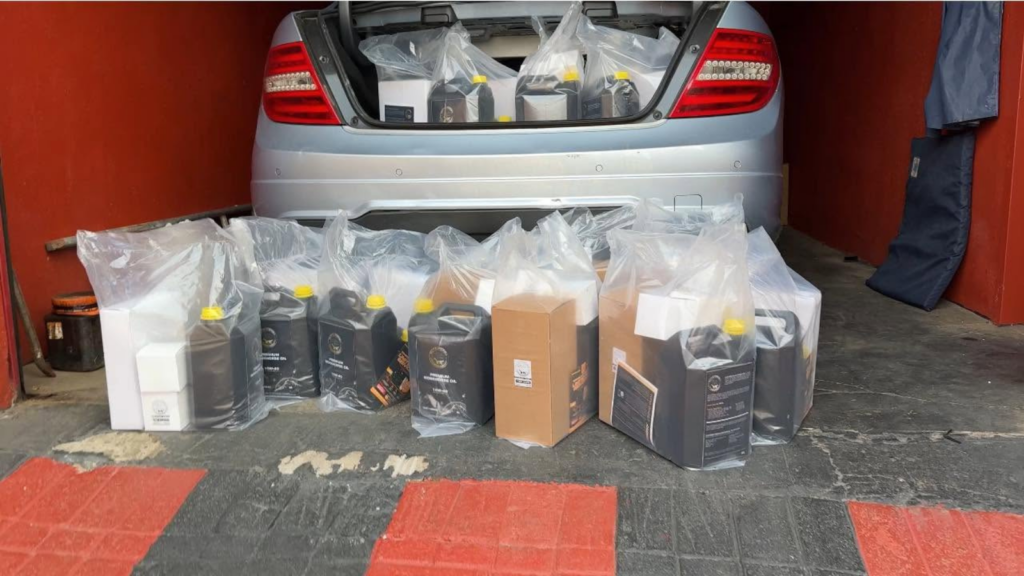
“They want the best for their cars, from the parts to everything,” he said. “Our role is trying to bridge that gap, to say, here’s a good quality product with good quality oil.”
“When you climb into a Quantum from Soweto going to town, those taxis, the majority of the time, are well taken care of because you deal with these guys and they spend the money to keep the taxis up and running.”
He explained that today’s operators are meticulous about maintenance because their livelihoods depend on reliable vehicles.
“Gone are those days where we used to see patched-up cars with cardboard. These guys are very meticulous with their cars, and they love them,” he said.
Expanding the business
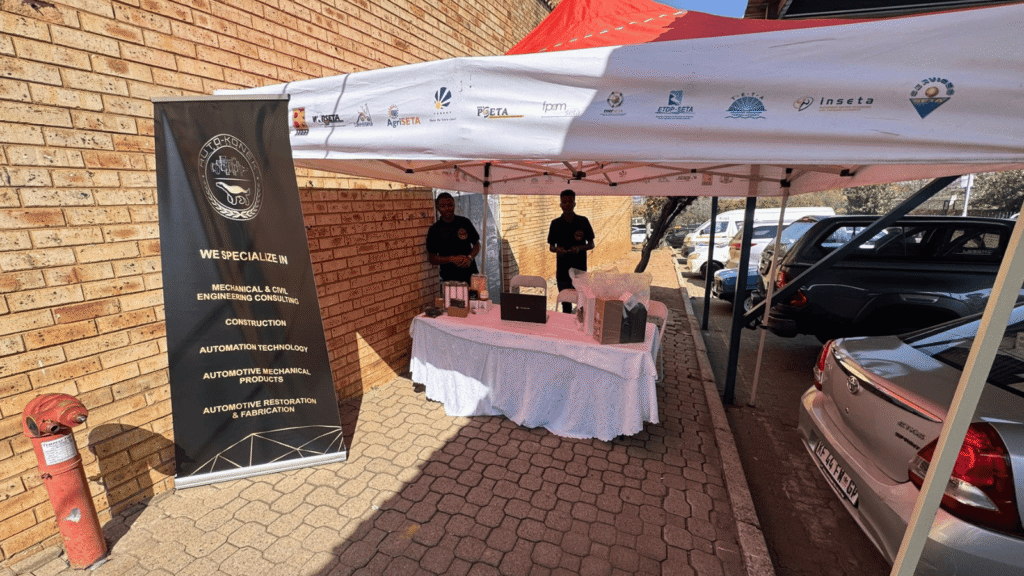
Helping turn Auto Konek’s technical expertise into a scalable business is Thembi Buthelezi, the company’s resource mobilisation head.
Her role involves securing partnerships, preparing funding proposals, and introducing Auto Konek to larger players in the automotive industry.
“We’re really working with Siphiwe to realise the vision by driving resources, creating funding proposals and pitches so that we can reach out to bigger partners in the automotive industry,” she said.
While responses have generally been encouraging, she noted that the business is still working on establishing its reputation.
“We do get a lot of positive response, but we also need to gain a little bit more traction in who we are and really break through the market,” she said.
Currently, the company primarily operates in Soweto, delivering service to around 15 to 20 taxi operators each month. However, Auto Konek plans to continue growing.
“We’re only operating mostly in Soweto, and we’re really looking to expand and partner with operators in other township areas where there is high taxi foot traffic,” Buthelezi said.
The business is seeking funding for retail outlets, forecourt space, and marketing to build awareness and reduce its reliance on direct sales.
However, for Dlamini, the key to future growth remains the same principle that helped him build the business in the first place.
“What’s important with the taxi operators is the element of trust. Can they trust your products?” he asked.
Up until this point, Dlamini explained that this trust has largely been built through direct customer recommendations.
“The majority of my client base has come from word of mouth. In the past year and a half of us being fully operational, the majority of my client base has been purely word of mouth,” he said.





Comments