Former Capitec CEO tried to make wine cheaper in restaurants


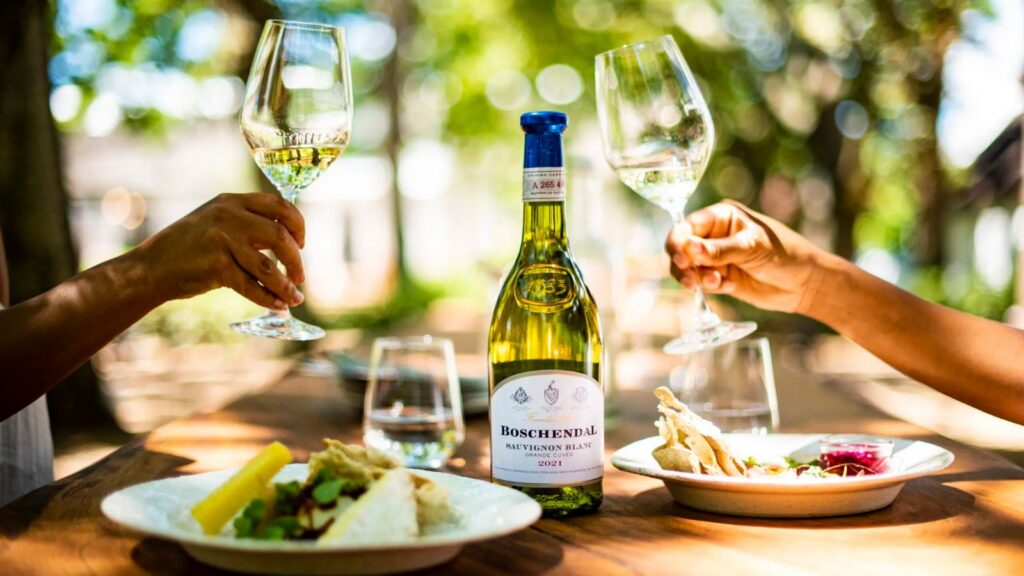
Former Capitec CEO Gerrie Fourie tried to get restaurants to stop marking up the price of wine by 200% to 300% by delivering stock to them within eight hours.
While Fourie managed to ensure wine was delivered to the restaurants in six hours, they never dropped their prices.
Fourie recalled this in a webinar hosted by the Efficient Group, where he discussed his career, which culminated in his serving as Capitec CEO for over a decade.
Prior to joining Capitec, Fourie already displayed his exceptional talent and a knack for running a business.
As with many of South Africa’s post-1994 business success stories, it began when Fourie was studying at Stellenbosch University.
“My dad said to me that I could study at any university, but that he would only pay if I went to Stellenbosch. That was a simple decision,” Fourie recalled.
Fourie went on to complete a Bachelor of Commerce degree at Stellenbosch and was set for a promising corporate career.
“But my passion was always entrepreneurship. I never wanted to work for a salary. So, I went to join the old Stellenbosch Farmers Winery,” he said.
It was there that Fourie learnt the skills that made him such a successful CEO of Capitec and many of the lessons that informed how the bank would operate.
In particular, Fourie learnt how important it was to connect with clients, keep things simple, and execute a strategy effectively.
“I learnt and made mistakes. I always wanted to ultimately start my own business and do my own thing,” he said.
“I began as a stock clerk, just counting stock. Within six or seven months, I was promoted to the financial planning division led by Carl Fischer.”
This division was tasked with creating the budgets for the Stellenbosch Farmers Winery, giving Fourie early insight into how to bring a strategy to life.
Things changed drastically when Fourie turned 27. “Our managing director came into my office and said, ‘I want you in Natal on Monday.’”
Making wine cheaper

Fourie initially pushed back against going to Natal, saying that he was from Stellenbosch and that his entire life was in town.
However, the managing director won him over by telling him that he would be running Stellenbosch Farmers Winery’s entire provincial operations.
“KwaZulu-Natal was our second-biggest province at that stage, and at 27 I was general manager of KZN,” Fourie said.
“I looked after everything besides production. So, distribution, marketing, sales, et cetera. I was busy with my MBA, so all my theory was being tested in practice.”
Fourie explained that he challenged absolutely everything that the team was doing in the province, asking constant questions and finding out why things were being done the way they were.
There was one problem that Fourie could never solve: the high price of wine in restaurants. Business owners would mark up prices by as much as 300% on a bottle.
“The prices restaurants charge for wine, that 300% markup that they do on wine? I hate it like hell,” Fourie said.
Restaurant owners told Fourie that they have to charge such a high markup on wine because of the cost of storage, as they cannot move stock.
“I said to them that I would deliver stock to you within eight hours, so that you don’t have to carry stock and can make your prices lower,” Fourie said.
“We did that, we delivered within six or seven hours, but they never dropped their prices.”
This is partly because not everything is about the cost of storing wine, as alcohol is generally marked up quite significantly by restaurants.
Markups on alcohol are common because the margin earned on these sales subsidises thin food margins.
Simply put, food gets customers in the door, and alcohol sales are how most restaurants make their profits.
Wine, in particular, can be exceptionally expensive in restaurants because of the high overhead costs associated with serving it. These costs include staff and storage.
There is also high wastage when it comes to wine sales in a restaurant, particularly if it is served by the glass or cannot be sold relatively quickly.
Restaurant owners may also raise prices on specific bottles of wine to make other options look more attractive and affordable.



Comments