Petrol price joy for South Africa


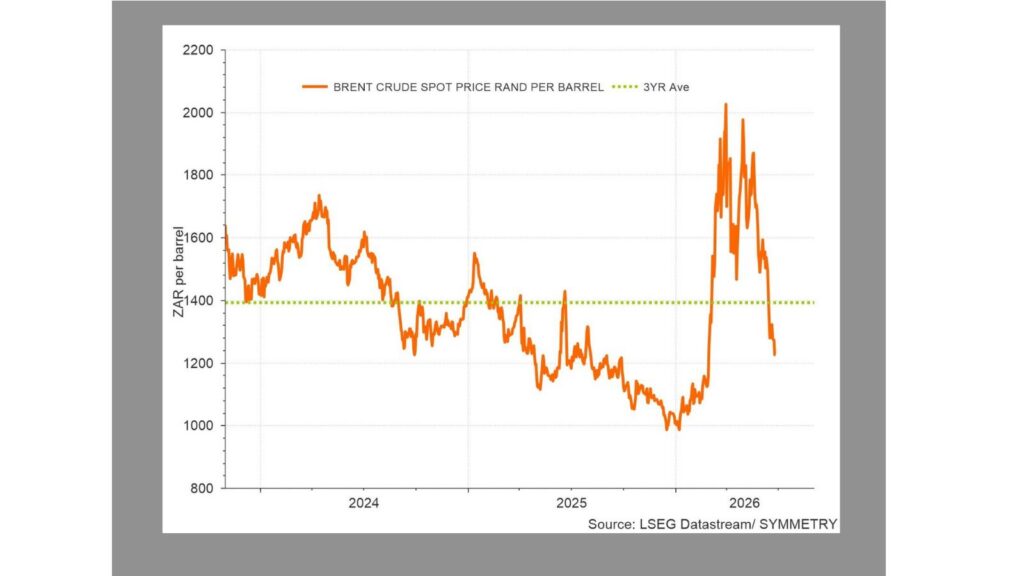
The rand price of a barrel of crude oil is now at its lowest level since fears of a supply disruption from the Middle East first upended markets.
This does not mean that petrol and diesel prices will return to these levels from July onwards, but there will be significant relief for South African motorists.
The Department of Mineral and Petroleum Resources uses the monthly average for oil prices and the rand-dollar exchange rate.
As a result, it will still be using a higher oil price than what it is currently and a slightly weaker rand when it calculates petrol and diesel prices for July.
The National Treasury is also slowly reintroducing the General Fuel Levy (GFL), which it cut in March to protect South African consumers from an oil price shock.
This will limit the cut in petrol and diesel prices in July as it adds back R1.50 per litre to begin collecting the GFL in its entirety.
However, Symmetry’s chief investment strategist, Izak Odendaal, said the coming cuts are still a good reason to be happy.
Odendaal noted that it indicates a somewhat swift return to normalcy and may translate into more subdued inflation numbers in the coming months.
Much still depends on how the US-Iran conflict is resolved and whether it can be done so sustainably.
One thing is certain – markets have reacted positively to the news. Oil prices have plunged, and emerging market currencies, such as the rand, have been bolstered.
Odendaal said this has resulted in the rand price of a barrel of crude oil now being at its lowest level since early March.
While the price is still 20% up on a year-to-date basis, it is far lower than the 100% it was in late April.
More importantly, the rand price for oil is now below the average level of the past three years and is restarting the downward trend it was on in 2025.
This means the petrol price will fall around R1.50 per litre next week, and diesel will drop by around R3.00 per litre. This takes into account the R1.50 added back to the GFL.
Household relief
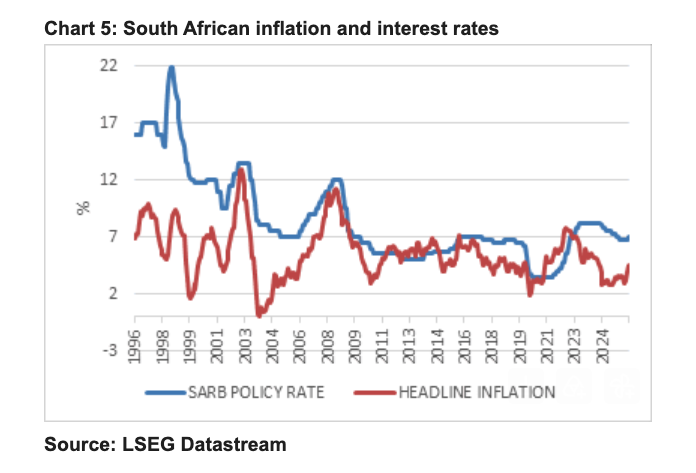
Lower fuel prices will reduce financial pressure on households and businesses, while also improving the inflation and interest rate outlook.
However, these benefits will take time to be felt, as inflation data is backwards-looking, Odendaal pointed out.
Most countries have only released May data, including South Africa, which was a period when oil prices averaged around $100. Oil is currently trading at $72 per barrel.
“It is only by July that reported inflation will start looking better. However, because the oil price fell sharply during the second half of last year, there is an unfavourable base for the remainder of this year,” Odendaal said.
“This will keep inflation rates somewhat elevated. It’s important to remember that inflation always compares current prices with a period in the past, usually 12 months earlier.”
The news for the impact on interest rates is less exciting as the outlook is more dependent, in the long run, on structural trends.
Odendaal expects the current cycle to be very short-lived as it is driven by a temporary supply shock to the oil market. In the long run, supply will stabilise with demand.
The biggest culprit in driving inflation higher has been fuel prices, which rose 28% year-on-year in May.
“June petrol inflation will be even higher, but will mark the peak. By the end of last week, the rand oil price was flat compared to a year ago,” Odendaal said.
By early next year, petrol inflation could be negative again and start pulling headline inflation down towards the 3% target next year.
Beyond fuel, core inflation ticked up to 3.8%, but the monthly increase was modest at 0.2%. There are a few obvious signs of second-round effects in the data.
This could change, and of course, there are risks to food prices from El Niño. However, the Reserve Bank’s policy rate is already at 7% and in restrictive territory.
There is no need for the Reserve Bank’s Monetary Policy Committee to to raise rates at the July meeting unless something dramatically changes the inflation outlook between now and then, Odendaal explained.
He expects rate cuts to come early next year, and interest rates are structurally set to continue to grind lower.
Odendaal said that achieving a 3% inflation target over time should be very positive for South African bonds and rate-sensitive equities, which remain priced as though long-term inflation will be much higher.





Comments