Good news about alcohol and cigarette prices in South Africa


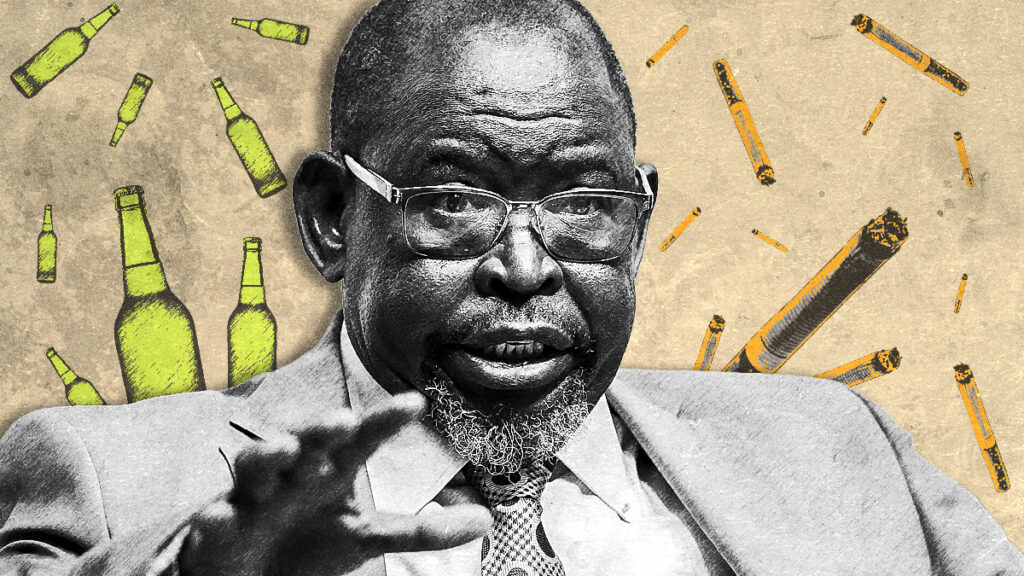
The National Treasury’s 2026 Budget proposed inflationary increases to “sin taxes” on alcohol and tobacco, offering relative relief to the industry, given that above-inflation hikes were expected.
This was revealed in Finance Minister Enoch Godongwana’s 2026 Budget, which he presented on Wednesday, 25 February 2026.
The Budget proposed changes to specific excise duties, often known as “sin taxes”, particularly on alcohol and tobacco products.
The 2026 Budget Review outlined tax proposals for the 2026/27 fiscal year, which include proposals related to the country’s excise duty.
The Budget proposes an inflationary increase of 3.4% in excise duties on alcohol. The Treasury assured that it would continue stakeholder consultations on the alcohol excise review in 2026.
A similar inflationary increase is proposed for tobacco products. This includes excise duty on electronic nicotine and non-nicotine delivery systems (vapes).
Excise duty adjustments will take effect on 1 April 2026. The required legislative amendments will be included in the taxation laws amendment bills this year. Specific excise duties for 2026/27 were proposed on various products –
| Product | Change |
|---|---|
| Malt beer | Increase from R145.07 to R149.98 per litre of absolute alcohol (a 3.39% nominal change) |
| Traditional African beer | No change from 7.82 cents per litre |
| Traditional African beer powder | No change from 34.70 cents per kg |
| Wine | Increase from R5.95 to R6.15 per litre (a 3.39% nominal change) |
| Sparkling wine | Increase from R19.03 to R19.68 per litre (a 3.39% nominal change) |
| Other fermented beverages (like cider and alcoholic fruit beverages) | Increase from R145.07 to R149.98 per litre (a 3.39% nominal change) |
| Spirits | Increase from R292.91 to R302.84 per litre of absolute alcohol (a 3.39% nominal change) |
| Cigarettes | Increase from R22.81 to R22.81 per 20 cigarettes (a 3.39% nominal change) |
| Heated Tobacco Products (HTPs) sticks | Increase from R17.10 to R17.68 per 20 sticks (a 3.39% nominal change) |
| Cigarette tobacco | Increase from R25.63 to R26.50 per 50g (a 3.39% nominal change) |
| Pipe tobacco | Increase from R8.03 to R8.31 per 25g (a 3.39% nominal change) |
| Cigars | Increase from R134.40 to R138.96 per 23g (a 3.39% nominal change) |
| Electronic Nicotine and Non-Nicotine Delivery Systems (ENDS/ENNDS) | Increase from R3.18 to R3.29 per ml (a 3.39% nominal change) |
Relief for the industry
This Budget offers relief to South Africa’s alcohol and tobacco industry, since many members had expected to see another above-inflationary increase.
Premium spirits company Diageo South Africa welcomed the decision by the Finance Minister to limit the increase in the excise tax levied on alcohol to the projected inflation of 3.4%.
The increase places the excise on spirits at R97.66 per 750ml bottle, avoiding breaking the R100-per-bottle tax threshold.
“The commitment by the minister to stakeholder consultation to review the current excise tax policy on alcohol is also welcomed,” the company said.
“We believe that this policy review is an opportunity to establish equity in the taxation of alcoholic beverages and to limit the growth of illicit trade arising from high levels of taxation.”
Diageo added that it is committed to participating in the tax policy review process to improve the sustainability of the alcohol industry and its contribution to South Africa’s economic growth.
“Furthermore, we support the efforts announced by the President and the Minister of Finance to deal with illicit trade in alcohol, tobacco and fuel,” the company said.
“Diageo South Africa invests significantly in responsible consumption and alcohol education initiatives, and continues to prioritise partnerships with government and other role-players to address alcohol-related harm.”
Prior to the 2026 Budget Speech, Diageo South Africa had warned that a higher tax on spirits would likely pass the significant R100 per 750ml bottle mark if Godongwana applied the usual 6%-plus annual increase.
“At R100 per bottle, government tax becomes the biggest component of the cost to the consumer, ranging between 55% and 65% of the retail selling price of mainstream spirits products,” said Diageo South Africa Corporate Relations Director Sibani Mngadi.
“We believe there is no room for consumers to absorb further increases in the statutory component of the price.”
The tax levied on spirits has practically doubled from R52 per bottle in 2016. Tax-evading illicit traders turn this large tax burden to the benefit of their own criminal networks.
These traders offer smuggled and counterfeited spirits at less than 50% of market prices, putting consumers’ health at risk while the government loses out on much-needed tax revenue.
The company claimed the large tax increases on spirits over many years have directly facilitated the exponential growth of illicit trade, which now stands at 18% of the alcohol market.
“If the excise tax is intended to moderate the overall volume consumption of alcohol in the population, a similar rate per litre of absolute alcohol should apply, irrespective of whether that alcohol is from a distilled or fermented alcoholic beverage,” Mngadi said.




Comments