The crime turning a South African township into a warzone


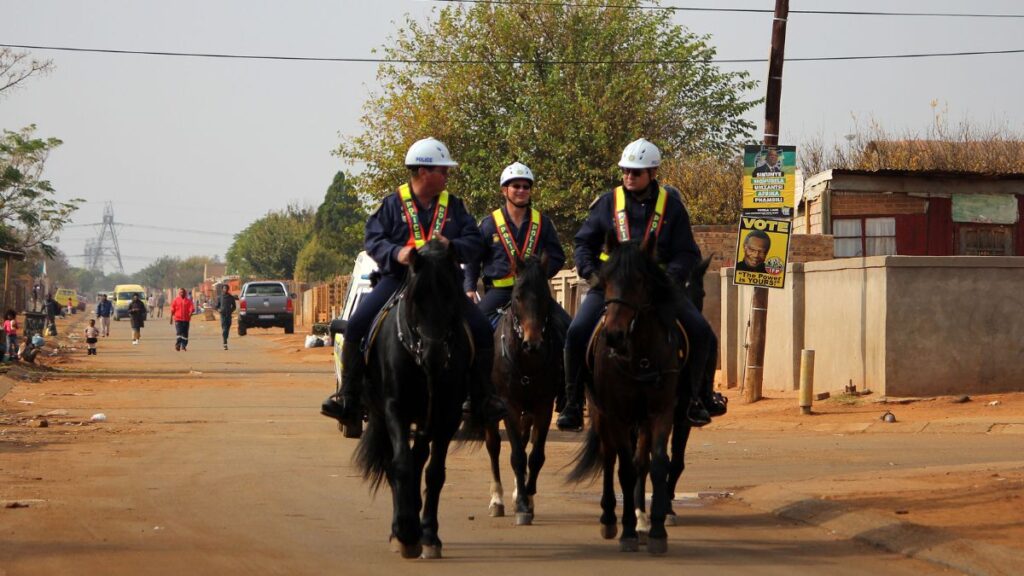
Illegal mining has turned Bekkersdal in Gauteng into a warzone, plunging the township into lawlessness, violence and fear.
This has led the Gauteng Provincial Legislature’s Portfolio Committee on Community Safety to conduct an oversight visit to the Bekkersdal Police Station to assess its capacity to effectively respond to and combat these crimes, with serious shortcomings identified.
This comes as the country is struggling to get illegal mining under control, with the issue in the Bekkersdal area, as well as other parts of South Africa, escalating to other crimes, including kidnappings, murders, and theft.
On Monday, 9 February, the Gauteng Provincial Legislature’s Portfolio Committee on Community Safety expressed its concern over Bekkerdal’s growing illegal mining problem.
Established in 1945, Bekkersdal is a township located near Westonaria in Gauteng. The area was originally built up to house mine workers employed at nearby gold mines.
However, this has made it a hotspot for South Africa’s growing illegal mining problem, with the committee saying the area has been “plunged into lawlessness, violence and fear”.
“The committee is gravely disturbed by the unacceptable and violent nature of crimes linked to illegal mining,” it said.
“In December last year, a mass shooting at an illegal tavern in Bekkersdal left 21 people shot, with nine lives tragically lost.”
“Last week, the committee was further briefed on another violent incident in which an alleged zama zama was shot and wounded during nighttime gunfire in the area.”
The committee further explained that illegal mining has also fueled a surge in kidnappings, with victims reportedly being followed to their homes after illegal mining transactions.
Once at their homes, victims’ family members are abducted, and ransoms are demanded. “In cases where ransoms are not paid, victims are brutally murdered, further entrenching fear and contributing to the alarming escalation of violent crime in the community,” the committee said.
Once the committee conducted its oversight visit to the Bekkersdal Police Station, it identified serious shortcomings that undermine effective policing, including critical resource shortages and poor, inadequate infrastructure.
“The committee reiterates that the situation in Bekkersdal is unacceptable and requires urgent, coordinated intervention,” it said.
“The committee remains committed to contributing to decisive action that will restore safety, uphold the rule of law and ensure a significant reduction in crime in Bekkersdal. The people of Bekkersdal deserve to live without fear.”
From R7 billion to R60 billion in eight years

The scourge of illegal mining is not limited to Bekkersdal, with several parts of the country struggling to ward off the crime.
In a recent research note, the Bureau for Economic Research’s Robert Botha estimated that illicit mining has grown by 757% from R7 billion in 2017 to R60 billion in 2025.
“Crime in the sector and illicit mining has evolved from opportunistic theft to systemic extortion and organised crime,” he explained.
Botha attributed this, in part, to the lack of a transparent cadastral system, which has enabled corruption and information externalities, where insider knowledge from the failed SAMRAD system is exploited to grant overlapping rights.
“From a growth-diagnostics perspective, this forms a constraint, and the risk-adjusted return on legal investment plummets,” he explained.
Positively, he noted that recent state interventions offer a glimmer of progress, notably through Operation Vala Umgodi.
This initiative was launched in December 2023 as a coordinated, multi-disciplinary operation, specifically aimed at combating illegal mining and associated crimes across South Africa.
However, Botha said more needs to be done. One recommendation is to formalise Operation Vala Umgodi into a permanent, dedicated Mining Police Task Force.
This task force will be solely focused on dismantling organised syndicates in the mining sector.
In addition, Botha suggested that, given the magnitude and alleged nature of crime and corruption in the sector, a Judicial Commission of Inquiry should be considered.
Ultimately, he said the success of reform will depend on the government’s ability to purge potential corruption from within and restore the rule of law across the mineral complex.
Headline image: Wesley Fester




Comments